How to Repair a Damaged Skin Barrier
Your skin barrier is a lipid matrix that keeps moisture in and irritants out. When it's damaged (from over-exfoliation, harsh products, or environmental stress) everything stings, skin flakes, and breakouts appear from nowhere. Here's the evidence-based protocol to rebuild it.
⚡ TL;DR
Step 1: Stop all actives (retinol, AHAs, BHAs, vitamin C). Step 2: Strip routine to 3 steps: gentle cleanser + ceramide moisturizer + SPF. Step 3: Add niacinamide 5% after 3-5 days. Timeline: 2-4 weeks for moderate damage. Resume actives: Only after 2+ weeks of zero sensitivity.
What Is the Skin Barrier?
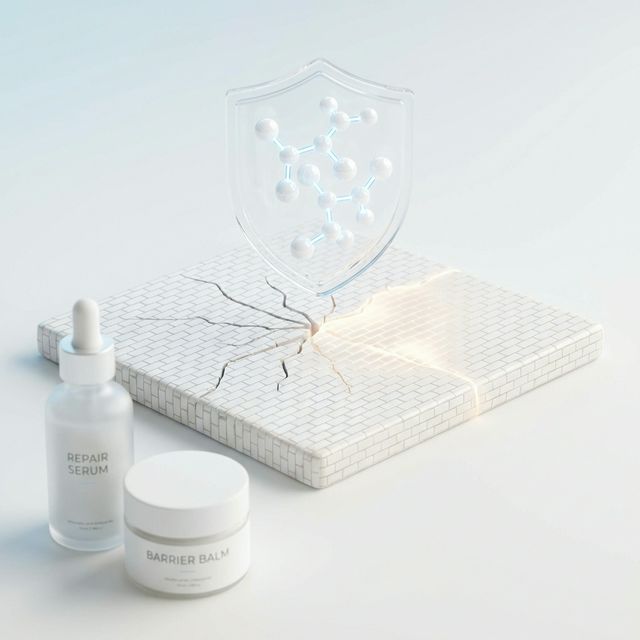
The skin barrier (stratum corneum) is the outermost layer of your skin, a "brick and mortar" structure where corneocytes (dead skin cells) are the bricks, and a lipid matrix of ceramides, cholesterol, and fatty acids is the mortar. According to a 2019 review in the Journal of Clinical Medicine (DOI: 10.3390/jcm8111788), this barrier performs three critical functions:
1. Moisture Retention
Prevents transepidermal water loss (TEWL). When damaged, skin loses water 2-5x faster than normal, causing tightness and dehydration even when you apply moisturizer.
2. Irritant Defense
Blocks environmental irritants, pollutants, and allergens. A compromised barrier lets these penetrate, causing the "stinging" sensation with products that didn't burn before.
3. Microbiome Balance
Maintains the acidic pH (4.5-5.5) that supports beneficial bacteria and suppresses harmful ones. Barrier damage disrupts pH, leading to inflammation and unexpected breakouts.
Signs Your Barrier Is Damaged
| Symptom | What It Means | Severity |
|---|---|---|
| Tightness after cleansing | Lipid matrix is depleted: moisture escaping | Mild |
| Products that never stung now burn | Barrier gaps letting ingredients penetrate too deep | Moderate |
| Redness / inflammation | Immune response to barrier breach | Moderate |
| Flaking / peeling | Corneocytes detaching prematurely | Moderate |
| Breakouts in new areas | Microbiome disrupted, bacteria penetrating | Severe |
| Raw, "burning" sensation all over | Near-total barrier compromise | Severe |
What Causes Barrier Damage
Over-Exfoliation
Using AHAs/BHAs too frequently, too many actives at once, or combining retinol + exfoliants without proper timing. See our conflict guide.
Harsh Cleansers
High-pH cleansers (bar soap pH 9-10), sulfate-heavy foaming cleansers, or physically abrasive scrubs strip the lipid matrix.
Environmental Stress
Low humidity (winter), excessive wind, indoor heating/AC, and UV exposure all compromise barrier integrity. See our seasonal routine guide.
Too Many New Products
Introducing 3+ new products simultaneously overwhelms the barrier with unfamiliar ingredients. Always introduce one product at a time, 2 weeks apart.
The Barrier Repair Protocol
Phase 1: Stop & Strip (Days 1-3)
Remove everything except basics
- Stop: Retinol, AHAs, BHAs, vitamin C, benzoyl peroxide. ALL actives
- Stop: Alcohol-based toners, foaming cleansers, physical scrubs
- Keep: Gentle cream/oil cleanser + ceramide moisturizer + SPF 30+
- That's it. 3 products only. Resist the urge to "fix" things by adding more.
Phase 2: Repair & Soothe (Days 3-14)
Add barrier-repairing ingredients
☀️ AM
- Cream/oil cleanser (no foam)
- Niacinamide 5% serum
- Ceramide moisturizer
- SPF 30+ (mineral preferred, less irritating)
🌙 PM
- Gentle cleanse (water-only if skin tolerates)
- Hyaluronic acid on damp skin
- Ceramide moisturizer (generous layer)
- Occlusive seal: squalane or petroleum jelly
Phase 3: Gradual Reintroduction (Weeks 3-6)
Only when symptoms are fully resolved
Barrier Repair Ingredients: What to Look For
| Ingredient | Role | Look For |
|---|---|---|
| Ceramides | Rebuild lipid matrix (the "mortar") | Ceramide NP, AP, EOP |
| Niacinamide | Stimulates ceramide production, anti-inflammatory | 5% concentration |
| Cholesterol | Essential lipid in barrier structure | Often paired with ceramides |
| Hyaluronic acid | Humectant: draws water into skin | Apply to damp skin |
| Squalane | Emollient: seals moisture, mimics skin lipids | PM occlusive step |
| Panthenol (Pro-vitamin B5) | Wound healing, moisture retention | 5% in repair creams |
Find barrier-friendly products instantly
SkinGuard scans ingredient lists and flags barrier-damaging ingredients like alcohol denat, SLS, and high-concentration exfoliants. It also detects ceramides, niacinamide, and other barrier-repairing compounds.
Scan Your Products Free →Frequently Asked Questions
How do I know if my skin barrier is damaged?+
Key signs include: skin feels tight even after moisturizing, burning or stinging when applying products that didn't irritate before, redness and sensitivity that appeared suddenly, increased dryness or flaking, breakouts in unusual areas, and skin looking dull or 'angry.' If 2+ of these appeared after changing your routine or environment, barrier damage is likely.
How long does it take to repair a damaged skin barrier?+
Mild damage (product sensitivity): 1-2 weeks with simplified routine. Moderate damage (visible redness, flaking): 2-4 weeks. Severe damage (from overuse of actives or harsh treatments): 4-8 weeks. The skin's natural cell turnover cycle is 28 days, so full repair rarely takes less than a month.
Can I use retinol with a damaged skin barrier?+
No. Stop all actives (retinol, AHAs, BHAs, vitamin C) until your barrier fully recovers. Retinol increases cell turnover, which further stresses a compromised barrier. Resume retinol only after 2+ weeks of no sensitivity, starting at the lowest concentration.
What ingredients repair the skin barrier?+
Three essential categories: (1) Ceramides, restore the lipid matrix between skin cells. Look for ceramide NP, AP, and EOP. (2) Niacinamide 5%, supports ceramide production and reduces inflammation. (3) Fatty acids, cholesterol, squalane, and linoleic acid fill gaps in the barrier. Together, these mimic the skin's natural protective structure.
Does drinking water fix a damaged skin barrier?+
No. Internal hydration doesn't directly repair the barrier's lipid structure. Barrier repair requires topical ceramides, fatty acids, and humectants applied directly to the skin. Drinking adequate water supports overall skin health, but it won't fix a compromised barrier any faster.
Related Articles
⚕️ This article is for educational purposes only and does not replace professional dermatological advice. Consult a dermatologist for persistent skin concerns.