Best Sunscreen for Your Face: The Complete SPF Guide by Skin Type
Sunscreen is the single most effective anti-aging product you can buy, more than retinol, more than vitamin C, more than any $200 serum. But the wrong sunscreen can break you out, leave a white cast, or pill under makeup. This guide matches you with the right facial SPF based on your skin type, your actives, and real ingredient science.
⚡ TL;DR
Use broad-spectrum SPF 30+ daily, even indoors. Mineral sunscreens (zinc oxide) suit sensitive and acne-prone skin; chemical sunscreens (avobenzone) layer better under makeup. According to a 2019 JAMA Dermatology study, daily SPF use reduces melanoma risk by 50% and photoaging by 24% within 4.5 years.
📖 What Is SPF?
SPF (Sun Protection Factor) measures how effectively a sunscreen blocks UVB radiation, the rays that cause sunburn and contribute to skin cancer. SPF 30 allows 1/30th (3.3%) of UVB to reach your skin, blocking 96.7%. SPF 50 blocks 98%. According to the American Academy of Dermatology (AAD), SPF measures only UVB protection; you need "broad-spectrum" labeling to ensure UVA coverage, which drives photoaging and deep skin damage.
Why Sunscreen Is the #1 Anti-Aging Product
Every dermatologist says the same thing: if you do one thing for your skin, wear sunscreen. This is not opinion, it is the most validated claim in dermatology.
According to a landmark 2013 study published in the Annals of Internal Medicine (DOI: 10.7326/0003-4819-158-11-201306040-00002), participants who applied SPF 15+ sunscreen daily showed 24% less skin aging after 4.5 years compared to those who used sunscreen irregularly. The daily users had measurably smoother, more resilient skin, even those who started over age 40.
According to the Skin Cancer Foundation, UV radiation accounts for up to 90% of visible skin aging, wrinkles, dark spots, and loss of elasticity. Your $80 retinol serum is fighting a losing battle without SPF backing it up.
🔬 The Truck Driver Study
A 2012 case report in the New England Journal of Medicine (DOI: 10.1056/NEJMicm1104059) documented a 69-year-old truck driver with dramatic unilateral photoaging, the left side of his face (window side) appeared 20 years older than the right. UVA rays penetrate glass. This single image converted more people to daily sunscreen than any marketing campaign.
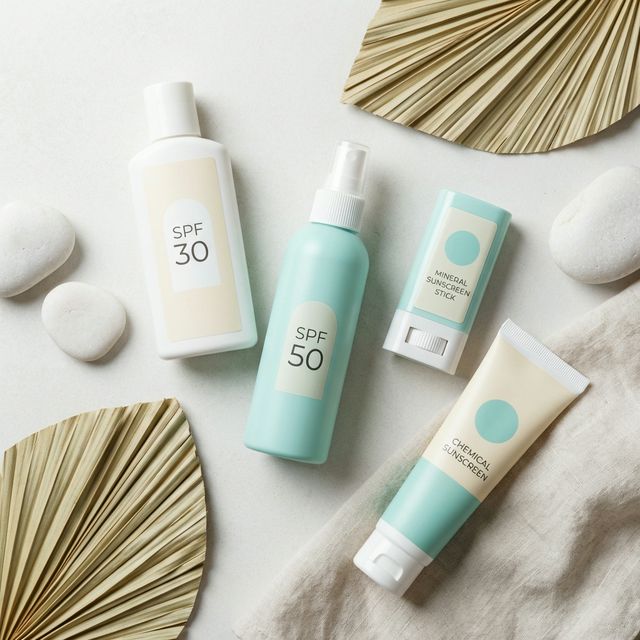
Mineral vs Chemical Sunscreen: The Real Difference
The mineral-vs-chemical debate generates more confusion than any other sunscreen topic. According to board-certified dermatologist Dr. Shereene Idriss, both types are safe and effective, the best sunscreen is the one you will actually wear daily.
| Factor | Mineral (Physical) | Chemical (Organic) |
|---|---|---|
| Active Ingredients | Zinc Oxide, Titanium Dioxide | Avobenzone, Octisalate, Octocrylene, Homosalate |
| How It Works | Sits on skin surface, reflects + scatters UV rays | Absorbs UV rays, converts to heat, releases |
| Protection Onset | Immediate: works on application | 15-30 minutes after application |
| Best For | Sensitive skin, rosacea, pregnancy, children | Oily skin, under makeup, deeper skin tones (no white cast) |
| Downside | White cast, thicker texture, can feel heavy | May irritate sensitive skin, some concerns about absorption |
| Reef Safe? | Yes (non-nano zinc oxide) | No (oxybenzone and octinoxate harm coral) |
According to a 2020 FDA study published in JAMA (DOI: 10.1001/jama.2019.20747), chemical UV filters (avobenzone, oxybenzone, octocrylene, and ecamsule) are absorbed into the bloodstream at levels exceeding FDA safety thresholds after a single day of use. However, the AAD emphasizes that no evidence links this absorption to health harm, and the cancer-prevention benefits of sunscreen outweigh theoretical absorption concerns.
Best Sunscreen by Skin Type
Your skin type determines not just which SPF ingredients you need, but the vehicle (gel, cream, fluid, stick) that will make you actually wear it daily.
| Skin Type | Best SPF Type | Texture | Key Ingredients | Avoid |
|---|---|---|---|---|
| Oily / Acne-Prone | Chemical or hybrid | Gel, fluid, or matte finish | Niacinamide, silica, oil-free base | Coconut oil, isopropyl myristate |
| Dry | Mineral or cream-based chemical | Moisturizing cream or lotion | Hyaluronic acid, ceramides, squalane | Alcohol denat (high %), mattifying agents |
| Sensitive / Rosacea | Mineral only | Fragrance-free cream or balm | Zinc oxide, centella, allantoin | Oxybenzone, fragrance, essential oils |
| Combination | Hybrid (mineral + chemical) | Lightweight lotion or fluid | Zinc oxide + chemical filters | Heavy creams, occlusive oils |
| Deeper Skin Tones | Chemical or tinted mineral | Tinted fluid or invisible chemical | Iron oxides (tint), avobenzone | Untinted mineral (white cast) |
According to dermatologist Dr. Adewole Adamson at the University of Texas at Austin, untinted mineral sunscreens leave a significant white cast on melanin-rich skin, which discourages daily use. Tinted mineral formulas with iron oxides solve this and add visible light protection, a bonus that clear sunscreens lack entirely.
Sunscreen Ingredients to Avoid
Not every ingredient in sunscreen is there to protect you. SkinGuard's ingredient scanner has analyzed thousands of SPF products and flags the following red-flag ingredients that commonly appear in facial sunscreens:
| Ingredient | Why It's Flagged | Found In |
|---|---|---|
| Oxybenzone | Hormone disruptor, absorbed above FDA threshold, coral reef damage | ~40% of chemical sunscreens |
| Isopropyl Myristate | Comedogenicity rating 5/5: highly pore-clogging | Budget SPF moisturizers |
| Coconut Oil (Cocos Nucifera) | Comedogenicity rating 4/5, triggers breakouts on face | "Natural" sunscreens |
| Fragrance / Parfum | Top allergen, causes contact dermatitis, increases photosensitivity | Most drugstore SPFs |
| Alcohol Denat (> 10%) | Strips barrier, increases TEWL, dries skin | Matte-finish sunscreens |
According to the Environmental Working Group (EWG), oxybenzone is detected in 97% of Americans' blood samples and is linked to endocrine disruption. Hawaii, Palau, and the U.S. Virgin Islands have banned oxybenzone and octinoxate in sunscreens due to coral reef damage. SkinGuard flags these ingredients automatically when you scan any SPF product.
SPF + Active Ingredients: Timing Rules
Your morning actives and your sunscreen need to work together, not cancel each other out. According to dermatologist Dr. Sam Bunting, the layering order and wait times matter significantly for both efficacy and protection.
| Active | Apply With SPF? | Timing Rule |
|---|---|---|
| Vitamin C (L-Ascorbic Acid) | ✅ Best combo | Apply vitamin C → wait 1-2 min → SPF. Vitamin C boosts SPF efficacy by 4x (Duke study) |
| Niacinamide | ✅ Safe | Layer under SPF freely. No wait time needed. Reduces SPF-induced oiliness. |
| AHA / BHA | ⚠️ PM only | Use acids at night. They increase photosensitivity by 45% for 48 hours. SPF is critical the morning after. |
| Retinol / Tretinoin | ⚠️ PM only | Retinoids degrade in sunlight. Never apply in AM. SPF 30+ is mandatory the next morning. |
| Benzoyl Peroxide | ⚠️ Careful | Can bleach tinted sunscreens. Apply BP → wait 5 min → untinted SPF only. |
According to a landmark Duke University study by Dr. Sheldon Pinnell, published in the Journal of the American Academy of Dermatology (DOI: 10.1016/j.jaad.2003.12.017), applying a vitamin C serum (15% L-ascorbic acid) under sunscreen quadrupled the photoprotection compared to sunscreen alone. This combination is the gold standard of morning skincare.
SPF Needs Change Through Your Menstrual Cycle
Your skin's sensitivity to UV radiation is not constant, it shifts with your hormones. According to research in the Journal of the European Academy of Dermatology and Venereology, estrogen plays a photoprotective role, meaning your UV vulnerability increases when estrogen drops.
| Cycle Phase | Days | SPF Consideration |
|---|---|---|
| Menstruation | 1–5 | Skin is sensitive and dry. Use hydrating mineral SPF. Avoid alcohol-based formulas. |
| Follicular | 6–13 | Rising estrogen = most resilient skin. Tolerate any SPF type. Best time to try new products. |
| Ovulation | 14 | Peak oiliness. Switch to matte/gel SPF. Estrogen peaks = good UV tolerance. |
| Early Luteal | 15–21 | Progesterone rises, sebum increases. Lightweight, oil-free SPF prevents congestion. |
| Late Luteal | 22–28 | Most sensitive phase. Estrogen drops, inflammation rises. Use gentle mineral SPF, avoid fragrance. |
SkinGuard's Cycle Sync feature automatically adjusts your sunscreen recommendation based on your cycle phase, suggesting lightweight SPF during ovulation and gentle mineral SPF during the late luteal phase when your barrier is weakest.
How to Apply Facial Sunscreen Correctly
Most people apply only 25-50% of the recommended amount. According to the AAD, you need 1/4 teaspoon (about 1.25 mL) for the face alone, roughly a nickel-sized dollop. Here is the correct application sequence:
- Finish your morning routine, cleanser → serum (vitamin C) → moisturizer
- Wait 1-2 minutes for moisturizer to absorb
- Apply 1/4 teaspoon of SPF, dot on forehead, cheeks, nose, chin, neck
- Blend outward with fingertips. Do not rub vigorously (disrupts sunscreen film)
- Wait 10-15 minutes before makeup (chemical SPF needs time to bind)
- Don't forget, ears, hairline, neck, hands
💡 The Two-Finger Rule
Squeeze sunscreen along your index and middle finger from tip to crease. This equals approximately 1/4 teaspoon, the right amount for your face. According to a 2019 study in Acta Dermato-Venereologica, using the two-finger method improved sunscreen application accuracy by 62% compared to free-pouring.
How SkinGuard Checks Your Sunscreen
SkinGuard's ingredient scanner reads your sunscreen label and instantly identifies:
- Comedogenic ingredients, flags pore-clogging oils and emollients hidden in SPF formulas
- Known irritants, oxybenzone, fragrance, and high-concentration alcohol denat
- Conflicts with your actives, warns if your morning retinol or AHA conflicts with SPF timing
- Cycle compatibility, suggests switching SPF texture during high-sensitivity phases
Scan your sunscreen in 3 seconds
Point SkinGuard at your SPF ingredient list. Get instant safety scores, comedogenicity ratings, and conflict alerts, all from a database of 28,705 verified substances.
Download SkinGuard Free →3 Sunscreen Myths Debunked
❌ Myth: "Dark skin doesn't need sunscreen"
According to the Journal of the American Academy of Dermatology, melanin provides an equivalent of SPF 13.4 in the darkest skin tones, far below the recommended SPF 30. People of color are also diagnosed with melanoma at later, more dangerous stages because of this myth.
❌ Myth: "SPF in makeup is enough"
According to a 2017 study in the British Journal of Dermatology, you would need 7x the normal amount of foundation to achieve the labeled SPF. A separate sunscreen layer is non-negotiable. SPF makeup can supplement, not replace, dedicated sunscreen.
❌ Myth: "Higher SPF means double the protection"
SPF 30 blocks 96.7% of UVB; SPF 60 blocks 98.3%. The real differentiator is application amount and reapplication frequency, not SPF number. According to the AAD, SPF 30 applied correctly outperforms SPF 50 applied poorly.
Frequently Asked Questions
Is SPF 30 or 50 better for face? +
SPF 30 blocks 97% of UVB rays; SPF 50 blocks 98%. The 1% difference matters less than proper application. Dermatologists recommend SPF 30 minimum, applied generously (1/4 teaspoon for face). According to the AAD, most people under-apply by 50%, which drops SPF 30 to functional SPF 15.
Should I use mineral or chemical sunscreen? +
Mineral sunscreens (zinc oxide, titanium dioxide) sit on the skin and reflect UV. Chemical sunscreens (avobenzone, octisalate) absorb UV. Sensitive or rosacea-prone skin benefits from mineral; oily skin often prefers lightweight chemical formulas. Both are safe and effective when properly formulated.
Do I need sunscreen indoors? +
Yes, if you are near windows. UVA rays penetrate standard glass and cause photoaging. A 2012 case report in the New England Journal of Medicine documented a truck driver with severe unilateral photoaging from UVA through his car window over 28 years. If you work by a window, apply SPF in the morning.
Can sunscreen cause acne? +
Some sunscreens contain comedogenic ingredients like isopropyl myristate (comedogenicity 5/5) and coconut oil (4/5) that clog pores. Look for "non-comedogenic" and "oil-free" on the label. SkinGuard's scanner identifies pore-clogging ingredients in any SPF product, scan before you buy.
How often should I reapply sunscreen? +
Every 2 hours during direct sun exposure, or immediately after swimming or heavy sweating. For office days with minimal sun exposure, one thorough morning application plus a midday touch-up (SPF powder or mist) is generally sufficient according to dermatological consensus.
Related Articles
⚕️ This article is for educational purposes only and does not replace professional medical advice. Always consult a board-certified dermatologist for personalized sunscreen recommendations, especially if you have a history of skin cancer or photosensitivity conditions.