Why You Must Stop Retinol 7 Days Before Waxing (Skin Lifting Risk)
⚡ TL;DR
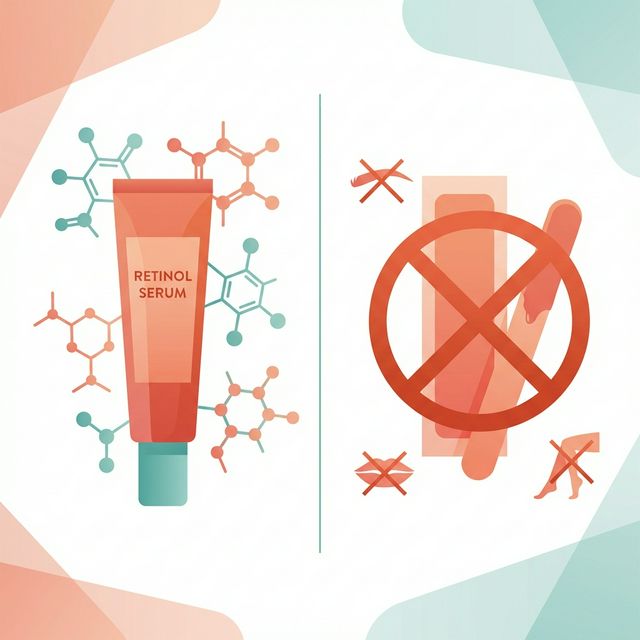
Stop all retinoid products at least 5–7 days before waxing, threading, or epilating. Retinoids thin your skin's protective outer layer by 20–40%, according to research in the Journal of the American Academy of Dermatology. Waxing on retinoid-treated skin can lift skin off, cause burns, and leave scars. SkinGuard classifies this as its only FORBIDDEN-severity conflict, the highest alert level in our 18-rule Conflict Engine.
📖 What Are Retinoids?
Retinoids are a class of vitamin A derivatives used in skincare to accelerate cell turnover, treat acne, reduce wrinkles, and fade dark spots. Common forms include over-the-counter retinol and retinaldehyde, prescription tretinoin (Retin-A), adapalene (Differin), and tazarotene (Tazorac). Oral isotretinoin (Accutane) is a systemic retinoid prescribed for severe acne. All retinoids thin the skin's protective barrier, which is why timing matters before procedures like waxing.
What Happens When You Wax on Retinoids
Retinoids, including retinol, tretinoin (Retin-A), adapalene (Differin), and tazarotene, accelerate cell turnover in the epidermis. This is what makes them effective for acne, wrinkles, and dark spots. But this same mechanism creates a dangerous vulnerability when combined with mechanical hair removal.
When retinoids speed up cell turnover, the stratum corneum (your skin's outermost protective layer) becomes thinner and less cohesive. The bonds between corneocytes weaken. According to research published in Clinical Interventions in Aging (Mukherjee et al., 2006), transepidermal water loss (TEWL) increases significantly, confirming barrier compromise.
Add waxing to this equation: hot wax adheres to the fragile skin surface and rips it away with mechanical force. Instead of removing only hair, the wax can:
- Lift skin off: The weakened top layers peel away with the wax strip, exposing raw dermis
- Cause chemical burns: Wax heat + compromised barrier = deeper chemical penetration and thermal injury
- Trigger PIH: Post-inflammatory hyperpigmentation, dark spots lasting months, especially on darker skin tones (Fitzpatrick IV–VI)
- Leave permanent scars: Deep skin lifting on the upper lip and eyebrow area can cause visible scarring
SkinGuard flags RETINOIDS × HAIR_REMOVAL as FORBIDDEN
This is the only combination in SkinGuard's 18-rule Conflict Engine that carries FORBIDDEN severity, higher than HIGH, MEDIUM, or LOW. Our analysis of 28,705 verified cosmetic substances confirms this is the most dangerous ingredient-procedure conflict in skincare. The app displays a full-screen warning that users must acknowledge before proceeding.
The Science: Why Retinoids Compromise Your Skin Barrier
According to Kligman (1986), published in the Journal of the American Academy of Dermatology, retinoid use reduces stratum corneum thickness by 20–40% within 4–8 weeks of regular application. A separate study in Dermatologic Surgery (Hubbard et al., 2014) documented multiple cases of full-thickness skin lifting during routine waxing in patients using prescription tretinoin, even with standard-temperature wax.
Three compounding factors explain why this happens:
- Thinned stratum corneum: Retinoids accelerate desquamation (cell shedding), leaving fewer protective cell layers between wax and living tissue
- Weakened intercellular lipids: The lipid "mortar" between corneocytes becomes less adhesive, reducing the skin's structural integrity
- Elevated TEWL: According to Rawlings and Harding (2004), published in Dermatologic Therapy (DOI), transepidermal water loss increases 3–4× above baseline in retinoid-treated skin, confirming the barrier is structurally compromised at a measurable level
The critical fact: this vulnerability persists for days after you stop applying retinoids. Retinoids alter gene expression in keratinocytes, and these changes don't reverse overnight. The stratum corneum needs 5–7 days to regenerate sufficient protective layers for safe mechanical hair removal.
How Long to Stop Retinol Before Waxing (By Type)
Different retinoids have different potencies and biological half-lives. The table below shows minimum cessation periods before any mechanical hair removal, based on published dermatological guidelines:
| Retinoid | Type | Strength | Stop Before Waxing |
|---|---|---|---|
| Retinol (0.25–1%) | OTC | Moderate | 5–7 days |
| Retinaldehyde | OTC | Moderate-High | 7 days |
| Adapalene (Differin) | OTC/Rx | High | 7–10 days |
| Tretinoin (Retin-A) | Rx | Very High | 10–14 days |
| Tazarotene (Tazorac) | Rx | Highest | 14 days |
| Isotretinoin (Accutane) | Oral Rx | Systemic | 6–12 months after course ends |
⚠️ Oral isotretinoin (Accutane) is unique: Because it works systemically, it affects skin everywhere, not just where you applied it. According to the American Academy of Dermatology, most dermatologists recommend waiting 6–12 months after completing an Accutane course before any waxing.
Safe Hair Removal Methods While Using Retinoids
According to Draelos (2006), published in Dermatologic Clinics, the safety of hair removal depends on whether the method adheres to or pulls the skin surface. You don't have to choose between retinoids and smooth skin, several methods work safely:
| Method | Safety Level | Notes |
|---|---|---|
| Shaving | ✅ Safe | Cuts hair at surface only. Use a sharp blade with shaving cream to minimize friction. |
| Electric trimmer | ✅ Safe | No direct skin contact. Best for sensitive areas like the upper lip. |
| Depilatory cream | ⚠️ Caution | Dissolves hair chemically. May sting on retinoid-treated skin: always patch test first. |
| Threading | ⚠️ Caution | Pulls hair with minimal skin contact. Generally safe for small areas like eyebrows. |
| Waxing / Sugaring | 🚫 STOP retinoids first | Must stop retinoids 5–14 days before, depending on type (see table above). |
| Epilator | ❌ Not recommended | Mechanical pulling causes skin lifting on thinned, retinoid-treated skin. |
| Laser hair removal | ⚠️ Pause 3–7 days | Photosensitivity risk from retinoids. Always consult your laser provider first. |
Step-by-Step Recovery Timeline After Waxing
If you properly paused retinoids and completed your wax, follow this timeline to resume safely:
- 0–24 hours post-wax: Apply a soothing balm with ceramides, centella asiatica, or panthenol. Use no actives of any kind, no retinoids, no AHA, no vitamin C.
- 24–48 hours: Continue gentle moisturizing. Your barrier is still recovering. Avoid direct sun exposure and apply SPF 50 if going outdoors.
- 48–72 hours: If skin is calm with no lingering redness, resume your regular routine, but still skip retinoids for one more day. Need help rebuilding? See our oily skin routine guide for a gentle restart schedule.
- 72+ hours: Resume retinoids at reduced frequency (every other night) for the first week, then return to your normal schedule.
💡 Pro tip: If you notice any redness, peeling, or stinging when you resume retinoids, wait another 48 hours. Pushing through irritation compounds barrier damage rather than accelerating recovery.
5 Signs of Retinoid-Related Waxing Damage
If you waxed while using retinoids (or didn't wait long enough), watch for these signs that require immediate attention:
- Raw, shiny patches: Skin lifted off with the wax, exposing the dermis. Apply a thick occlusive barrier cream and see a dermatologist within 24 hours.
- Intense burning sensation: Beyond normal post-wax sensitivity. If burning persists more than 30 minutes, this indicates chemical or thermal injury.
- Skin oozing or weeping: Fluid leaking from waxed areas signals a wound, not normal post-wax redness. Keep clean and seek medical attention.
- Dark spots appearing within days: Post-inflammatory hyperpigmentation forming on waxed areas, especially common in Fitzpatrick skin types IV–VI.
- Crusting or scabbing: This indicates deeper tissue damage. Do not pick or peel. Apply antibiotic ointment and consult a dermatologist.
How SkinGuard Detects This FORBIDDEN Conflict
SkinGuard's Conflict Engine contains 18 evidence-based rules across 5 severity levels: FORBIDDEN, HIGH, MEDIUM, LOW, and SYNERGY. The retinoids × hair removal rule (RULE_CRITICAL_01) is the only one classified as FORBIDDEN, the highest possible alert.
Here's how automatic detection works:
- Ingredient scanning: SkinGuard's OCR camera parses your product's ingredient list and identifies retinoid compounds (retinol, retinaldehyde, adapalene, tretinoin, retinyl palmitate, hydroxypinacolone retinoate, and 12+ variants) using a database of 28,705 verified substances
- Group classification: Identified retinoids are mapped to the
RETINOIDSorRETINOIDS_RXingredient groups automatically - Conflict triggering: If any product in your saved routine contains a retinoid group, the FORBIDDEN-severity alert fires with a full-screen warning
- Actionable guidance: The app displays specific cessation timelines and safe alternatives, the same information in this article, personalized to your exact products
This matters because many users don't realize their "anti-aging serum" or "brightening treatment" contains retinoids. Product names rarely mention retinol directly. SkinGuard eliminates guesswork by scanning every ingredient, not just the marketing name.
Frequently Asked Questions
Stop all retinoid products at least 5–7 days before waxing. For prescription retinoids like tretinoin (Retin-A), stop 7–14 days before. Your skin needs time to rebuild the stratum corneum layers that retinoids have thinned.
Most dermatologists recommend stopping retinoids 3–7 days before laser hair removal. Retinoid-thinned skin is more photosensitive and may experience increased irritation, redness, or post-inflammatory hyperpigmentation from the laser energy.
Dermaplaning on retinoid-treated skin carries moderate risk. The blade causes micro-cuts more easily on thinned skin. Most estheticians recommend pausing retinoids for 3–5 days before dermaplaning.
Wait at least 48–72 hours after waxing before resuming retinoids. Your skin barrier is compromised after waxing, and applying retinoids too soon causes stinging, redness, and potential chemical burns. If you notice lingering redness, wait until it fully resolves.
Shaving is the safest method, it only cuts hair at the surface without pulling or adhering to the skin. Electric trimmers work well for sensitive areas. Depilatory creams are generally safe but may sting. Avoid waxing, epilating, and sugaring unless you've paused retinoids.
References & Sources
- Mukherjee, S., et al. (2006). "Retinoids in the treatment of skin aging." Clinical Interventions in Aging, 1(4), 327–348. DOI
- Kligman, A.M. (1986). "The treatment of photoaged skin." Journal of the American Academy of Dermatology, 15(4), 749–776. DOI
- Draelos, Z.D. (2006). "Skin Health. Hair Removal." Dermatologic Clinics, 24(2), 141–145. DOI
- Hubbard, B.A., et al. (2014). "Adverse Events of Facial Rejuvenation." Dermatologic Surgery, 40(S12), S201–S213.
- American Academy of Dermatology. "Isotretinoin: An overview." aad.org
- SkinGuard Conflict Engine v1.0. Internal database: 18 conflict rules, 28,705 verified substances. Rule CRITICAL_01: RETINOIDS × HAIR_REMOVAL (FORBIDDEN severity).
SkinGuard Science Team
Our science team reviews peer-reviewed dermatological research, FDA guidelines, and European Commission CosIng data to create evidence-based skincare guides. SkinGuard's Conflict Engine analyzes 28,705 verified cosmetic substances across 18 interaction rules.