Skincare by Menstrual Cycle: The 5-Phase Hormone Guide
Your skin doesn't behave the same way all month, because your hormones don't either. This phase-by-phase guide shows you exactly which ingredients to use (and avoid) during each stage of your menstrual cycle, backed by dermatological research and real data from SkinGuard's Cycle Sync engine.
SkinGuard Science Team
Cosmetic ingredient analysts · Last updated: February 23, 2026
⚡ TL;DR
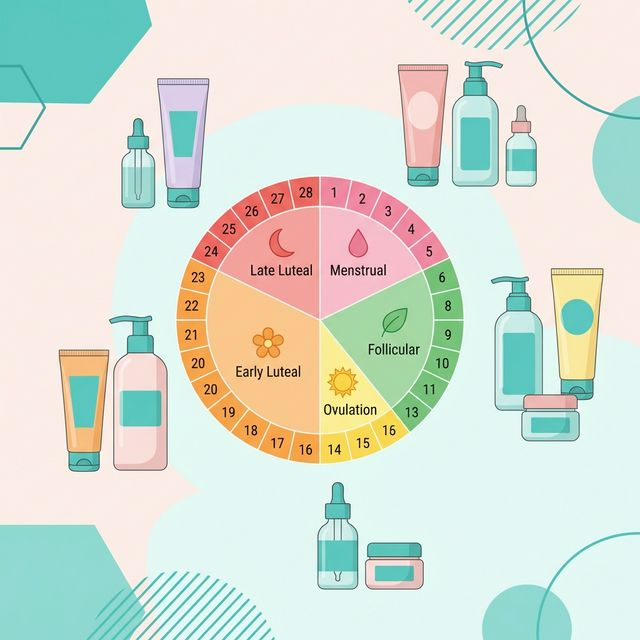
Your menstrual cycle has 5 distinct phases, each with different hormone levels that directly change your skin. During menstruation, focus on barrier repair (ceramides, hyaluronic acid). During the follicular phase, use your strongest actives (retinol, AHA, vitamin C). At ovulation, control rising oil with niacinamide and BHA. In the early luteal phase, fight pore congestion with BHA and azelaic acid, and watch for fungal acne. In the late luteal phase, switch to spot treatments and soothing ingredients only. Below: the exact ingredient recommendations for each phase, sourced from SkinGuard's cycle syncing data.
📖 What Is Cycle Syncing Skincare?
Cycle syncing skincare is the practice of adjusting your skincare routine, ingredients, product textures, and treatment intensity, to match your current menstrual cycle phase. According to research published in the Archives of Dermatological Research, estrogen and progesterone directly affect sebum production, skin barrier function, collagen synthesis, and inflammatory response throughout the 28-day cycle (DOI). Instead of using the same routine every day, cycle syncing adapts your skincare to what your skin actually needs right now.
🩸 Know Your Phase, Know Your Skin
SkinGuard tracks your menstrual cycle and automatically adjusts your skincare recommendations, telling you exactly which ingredients to use and avoid each week.
Sync Your Skincare Free →Why Your Skin Changes Every Week
According to a study published in the Journal of the European Academy of Dermatology and Venereology, the two primary reproductive hormones (estrogen and progesterone) have measurable effects on skin physiology throughout the menstrual cycle (DOI).
- Estrogen promotes collagen production, increases skin thickness, boosts hydration, and strengthens the skin barrier. When estrogen rises (follicular phase), skin looks its best.
- Progesterone stimulates sebaceous gland activity, increases sebum output, and can trigger pore congestion. When progesterone dominates (luteal phase), breakouts increase.
According to research from the American Academy of Dermatology, up to 65% of women report premenstrual acne flares, especially along the jawline and chin, where androgen-sensitive sebaceous glands are concentrated. This isn't random, it's predictable. And if it's predictable, your skincare can prepare for it.
| Hormone | Skin Effect | Peak Phase |
|---|---|---|
| Estrogen | ↑ Collagen, ↑ hydration, ↑ barrier strength, ↓ sebum | Follicular → Ovulation |
| Progesterone | ↑ Sebum production, ↑ pore congestion, ↑ inflammation | Early Luteal |
| Both dropping | ↑ Sensitivity, ↑ breakouts, ↓ barrier function | Late Luteal → Menstrual |
🔴 Phase 1: Menstrual: "The Reset" (Days 1-5)
Hormones: Low Estrogen + Low Progesterone
Your skin barrier is at its weakest. Pain threshold is lower. Skin feels dry, tight, and reactive.
According to the International Journal of Dermatology, transepidermal water loss (TEWL) increases significantly during menstruation as the skin barrier weakens. This is not the time to push your skin with strong actives, it's the time to protect and repair.
✅ Use
- • Ceramides (barrier repair)
- • Hyaluronic acid (hydration)
- • Panthenol / Vitamin B5 (soothing)
- • Centella asiatica (anti-inflammatory)
- • Sunscreen (always)
🚫 Avoid
- • AHA (glycolic, lactic acid)
- • BHA (salicylic acid)
- • Physical scrubs and exfoliants
- • Strong retinoids
Texture advice: Rich cream, sleeping mask. Focus on occlusives that seal moisture in.
🟢 Phase 2: Follicular: "The Glow Up" (Days 6-13)
Hormones: Estrogen Rising
Collagen production increases. Skin is resilient, hydrated, and absorbs actives better than any other phase.
According to research published in Dermatoendocrinology, estrogen promotes hyaluronic acid production in the dermis, increases skin thickness, and accelerates wound healing (DOI). This is your golden window for the most potent ingredients in your arsenal.
✅ Use (Go All In)
- • Vitamin C (pure L-ascorbic acid)
- • Peptides (collagen support)
- • AHA (glycolic acid exfoliation)
- • Retinoids (cell turnover)
- • Niacinamide (barrier + pigmentation)
ℹ️ No Restrictions
This is the only phase with no ingredient restrictions. Your skin can tolerate more during this window. Schedule chemical peels, new product introductions, and active treatments here.
Texture advice: Lightweight serum, gel moisturizer. Your skin absorbs more, use thinner formulas.
If you use retinol, the follicular phase is the best time to apply it. Your stronger barrier means less irritation risk. For more on retinol timing and safety, see our guide on why you must stop retinol before waxing and our article on retinol + AHA conflicts.
🟡 Phase 3: Ovulation: "Balance" (Days 14-16)
Hormones: Estrogen Peak + LH Surge
Skin looks its best, glowing and plump. But oil glands are activating. The shift begins.
Ovulation is a brief window (2-3 days) where estrogen peaks and the luteinizing hormone (LH) surges. According to the Journal of Investigative Dermatology, this hormonal shift begins triggering increased sebaceous gland activity, meaning your oil production is about to ramp up. Start preparing now.
✅ Use
- • Niacinamide (sebum regulation)
- • BHA / salicylic acid (pore prevention)
- • Green tea extract (antioxidant + oil control)
- • Zinc (anti-inflammatory, sebum regulation)
🚫 Avoid
- • Heavy facial oils
- • Shea butter / rich occlusives
- • Oil-based makeup primers
Texture advice: Lightweight gel formulas. Switch from cream SPF to gel or fluid SPF. If you have oily skin, increase your BHA frequency.
📱 Let SkinGuard Adapt Your Routine Automatically
SkinGuard connects to Apple HealthKit to detect your current cycle phase and adjusts skincare recommendations in real time, no manual tracking needed.
Start Cycle Syncing Free →🟠 Phase 4: Early Luteal: "Control" (Days 17-23)
Hormones: Progesterone Dominant
Pores start clogging. Oil production increases significantly. This is when breakouts begin forming under the surface.
According to the British Journal of Dermatology, progesterone stimulates sebaceous gland activity and increases sebum excretion rate during the luteal phase. This excess oil, combined with dead skin cells, creates the perfect environment for clogged pores and comedones, the precursors to the breakouts you'll see a week later.
✅ Use
- • BHA / salicylic acid (unclog pores)
- • Azelaic acid (anti-inflammatory + anti-bacterial)
- • Clay mask (absorb excess oil)
- • Tea tree oil (spot treatment)
🚫 Avoid
- • Shea butter and heavy occlusives
- • Facial oils (even "non-comedogenic" ones)
- • Heavy cream moisturizers
⚠️ Fungal Acne Warning
High oil production during the early luteal phase feeds Malassezia yeast, the cause of fungal acne. According to the Journal of the American Academy of Dermatology, fermented skincare ingredients like Galactomyces and Saccharomyces can worsen fungal acne by providing additional yeast nutrients. Avoid fermented products during this phase if you're prone to fungal breakouts.
Lifestyle tip: If you're sensitive to sugar or dairy, cutting back now may help prevent the breakouts forming under the surface.
Texture advice: Oil-free gel moisturizer, mattifying products. This phase pairs well with a complete oily skin routine.
🔴 Phase 5: Late Luteal: "Defense" (Days 24-28)
Hormones: Both Dropping
Inflammation spikes. Skin is sensitive and breakout-prone, especially along the jawline and chin. This is PMS week.
According to the International Journal of Women's Dermatology, the sharp decline in both estrogen and progesterone during the late luteal phase creates an inflammatory environment in the skin. The breakouts that started forming during the early luteal phase now surface, particularly on the lower face where androgen-sensitive sebaceous glands are concentrated.
✅ Use
- • Benzoyl peroxide (spot treatment only)
- • Sulfur (gentle anti-bacterial)
- • Centella asiatica (calm inflammation)
- • Ceramides (barrier support)
🚫 Avoid
- • AHA (glycolic, lactic acid)
- • Prescription retinoids
- • New skincare products (any kind)
- • Chemical peels or treatments
💡 Pro Tip
Do NOT try new skincare products this week. Your skin is at its most reactive. Any new product introduced during the late luteal phase has a higher chance of causing irritation, redness, or breakouts, which you might wrongly attribute to the product itself.
Lifestyle tip: Spearmint tea may help calm hormonal chin breakouts. According to a study in Phytotherapy Research, spearmint has anti-androgenic properties that can reduce sebum-stimulating hormones (DOI).
Texture advice: Spot treatments + soothing cream. Prioritize targeted care over full-face actives.
📅 The 28-Day Cycle Skincare Calendar
Here's the complete reference, every phase, every ingredient recommendation, in one table. This data is sourced directly from SkinGuard's cycle_syncing.json engine, the same data that powers our in-app Cycle Sync feature.
| Phase | Days | Hormones | Skin State | Recommend | Avoid |
|---|---|---|---|---|---|
| 🔴 Menstrual | 1-5 | Low E + Low P | Weak barrier, dry, reactive | Ceramides, Hyaluronic Acid, Panthenol, Centella | AHA, BHA, Scrubs |
| 🟢 Follicular | 6-13 | Estrogen Rising | Resilient, hydrated, absorbs well | Vitamin C, Peptides, AHA, Retinoids, Niacinamide | None |
| 🟡 Ovulation | 14-16 | Estrogen Peak + LH | Glowing but oil activating | Niacinamide, BHA, Green Tea, Zinc | Heavy Oils, Shea Butter |
| 🟠 Early Luteal | 17-23 | Progesterone Dominant | Pores clog, more oil | BHA, Azelaic Acid, Clay Mask, Tea Tree | Oils, Shea Butter, Fermented* |
| 🔴 Late Luteal | 24-28 | Both Dropping | Inflammation, chin breakouts | Benzoyl Peroxide, Sulfur, Centella, Ceramides | AHA, Rx Retinoids, New Products |
* Fermented ingredients (Galactomyces, Saccharomyces) can worsen fungal acne during high-oil phases. SkinGuard's Cycle Sync engine flags these automatically.
How SkinGuard's Cycle Sync Works
SkinGuard is the only skincare app with a built-in Cycle Sync engine. Here's what it does:
1. Automatic Phase Detection
Connect to Apple HealthKit and SkinGuard detects your current menstrual cycle phase automatically, no manual tracking required.
2. Real-Time Ingredient Alerts
Scan any product and SkinGuard tells you if it's safe for your current phase. Using AHA during menstruation? You'll get a warning with an explanation.
3. Phase-Specific Recommendations
Each phase shows tailored suggestions, from ingredient groups and product textures to lifestyle tips and daily skincare advice.
4. Fungal Acne Warnings
During high-oil phases, SkinGuard flags fermented ingredients that could trigger Malassezia overgrowth, a unique feature no other app offers.
The recommendations in this article come directly from SkinGuard's cycle syncing database, the same 5-phase model, the same ingredient groups, the same avoidance rules. The only difference: the app does it automatically, every day, for every product you scan.
Expert Tips for Cycle Syncing Your Skincare
- Schedule actives during the follicular phase. If you do chemical peels, microneedling, or start a new retinol product, days 6-13 give you the best tolerance window.
- Pre-treat before your luteal phase. Start using BHA and niacinamide around ovulation (day 14) to prevent the pore congestion that leads to luteal-phase breakouts.
- Keep a "menstrual phase" kit. Have ceramide cream, centella toner, and a sleeping mask ready for days 1-5. Your skin will thank you.
- Never test new products before your period. The late luteal phase (days 24-28) is your most reactive. New products are more likely to trigger irritation, and you'll blame the product instead of the hormones.
- Layer ingredients wisely. Even during the tolerant follicular phase, don't combine retinol with AHA on the same night. Read our guide on AHA vs BHA vs PHA to understand which acids work together and which don't.
Your Skin Has a Schedule. Follow It.
SkinGuard tracks your cycle, scans your products, and tells you exactly what to use each week, so you stop fighting your hormones and start working with them. Free to download.
Download SkinGuard Free →❓ Frequently Asked Questions
Why does my skin change throughout my menstrual cycle? ▼
Estrogen and progesterone fluctuate across your 28-day cycle, directly affecting sebum production, collagen synthesis, skin barrier strength, and inflammation levels. Each phase creates different skin needs.
When is the best time to use retinol in my cycle? ▼
The follicular phase (days 6-13) is your golden window for retinol and other potent actives. Rising estrogen makes skin more resilient and better able to tolerate exfoliation and cell turnover.
Why do I break out before my period? ▼
During the late luteal phase (days 24-28), both estrogen and progesterone drop sharply. This hormonal crash triggers inflammation and makes skin prone to chin and jawline breakouts.
Can I use AHA during my period? ▼
No. During menstruation (days 1-5), your skin barrier is at its weakest. Avoid AHA, BHA, and physical scrubs. Focus on gentle hydration with ceramides, hyaluronic acid, and centella asiatica.
What is cycle syncing skincare? ▼
Cycle syncing skincare means adjusting your products and actives to match your current menstrual cycle phase. Instead of using the same routine all month, you adapt to your hormonal skin changes.
📚 Related Articles
Skincare Routine for Oily Skin: AM/PM Guide
Build the perfect routine for excess oil control
Retinol and AHA: The #1 Skincare Conflict
Why you should never layer these two exfoliants
AHA vs BHA vs PHA: Which Acid Is Right for You?
Compare all four acid families side by side
Retinol Before Waxing: The Dangerous Mistake
Why you must stop retinol 7 days before hair removal
Niacinamide + Vitamin C: Myth Busted
These two are safe to combine, here's the proof
⚕️ Disclaimer: This article is for educational purposes only and is not medical advice. The content is not a substitute for professional dermatological consultation. Menstrual cycle lengths vary between individuals, the phases described here are based on a standard 28-day cycle. Consult a board-certified dermatologist or gynecologist for personalized recommendations, especially for hormonal acne, PCOS-related skin changes, or irregular cycles.
References
- Youn SW, et al. "The role of facial sebum secretion in acne pathogenesis." Arch Dermatol Res. 2005;297(2):63-71. DOI
- Endly DC, Miller RA. "Oily Skin: A review of Treatment Options." J Clin Aesthet Dermatol. 2017;10(8):49-55.
- Papakonstantinou E, Roth M, Karakiulakis G. "Hyaluronic acid: a key molecule in skin aging." Dermatoendocrinol. 2012;4(3):253-258. DOI
- Grant P, Ramasamy S. "An update on plant derived anti-androgens." Int J Endocrinol Metab. 2012;10(2):497-502. DOI
- Kamp E, et al. "Menstrual Cycle-Associated Acne." J Eur Acad Dermatol Venereol. 2017;31(S5). DOI