Salicylic Acid (BHA): The Complete Guide for Clear Skin
Salicylic acid is the only common exfoliant that works inside your pores. As a beta hydroxy acid (BHA), it's oil-soluble, meaning it cuts through sebum to dissolve the dead skin and oil that cause blackheads, whiteheads, and acne. Here's how to use it correctly.
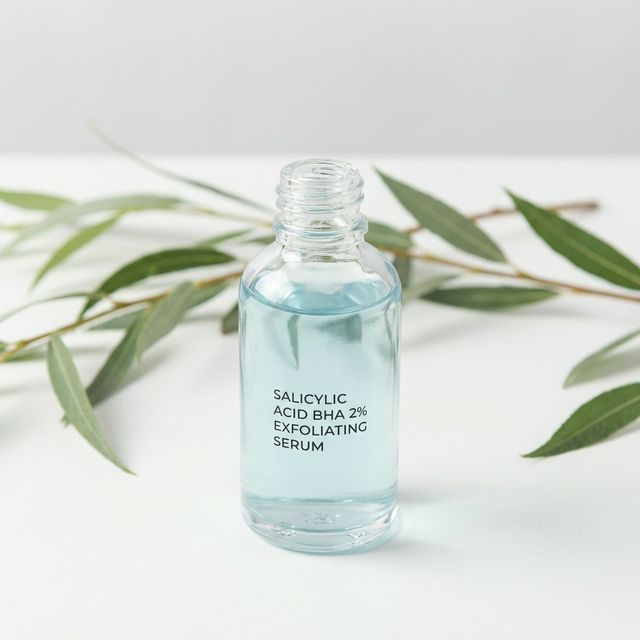
⚡ TL;DR
What: Oil-soluble exfoliant that works inside pores. Best for: Acne, blackheads, oily skin. Concentration: 2% for most people. Frequency: 2-3x/week to daily. Don't combine with: Other exfoliants (AHAs) on the same night. Pairs well with: Niacinamide, hyaluronic acid, ceramides.
How Salicylic Acid Works
Salicylic acid is a beta hydroxy acid (BHA) derived from willow bark. According to the American Academy of Dermatology (AAD), unlike AHAs (alpha hydroxy acids), which are water-soluble and work on the skin's surface, BHA is lipophilic (oil-soluble). This means it can penetrate through the oily sebum layer and exfoliate directly inside the pore.
According to a 2020 review published in Clinical, Cosmetic and Investigational Dermatology (DOI: 10.2147/CCID.S231318), salicylic acid works through three key mechanisms:
1. Keratolytic (Pore-Clearing)
Dissolves the "glue" (desmosomes) holding dead skin cells together inside the pore. This prevents and clears clogged pores, the root cause of blackheads and whiteheads.
2. Anti-Inflammatory
According to research in the Journal of Clinical and Aesthetic Dermatology (DOI), salicylic acid is structurally related to aspirin (acetylsalicylic acid) and shares its anti-inflammatory properties. It reduces redness, swelling, and the "angry" look of inflammatory acne.
3. Sebum-Regulating
Reduces excess oil without stripping the skin. This gives a mattifying effect without the rebound oil production that harsh cleansers cause.
BHA vs AHA: Which Do You Need?
| Feature | BHA (Salicylic Acid) | AHA (Glycolic, Lactic) |
|---|---|---|
| Solubility | Oil-soluble | Water-soluble |
| Where it works | Inside the pore | Skin surface |
| Best for | Acne, blackheads, oily skin | Dull skin, fine lines, texture |
| Inflammation | Anti-inflammatory | Can be irritating |
| Sun sensitivity | Minimal increase | Significant increase |
For a complete breakdown, see our AHA vs BHA vs PHA guide.
Concentration Guide
| Concentration | Form | Best For | Frequency |
|---|---|---|---|
| 0.5-1% | Cleanser, toner | Sensitive skin, beginners | Daily |
| 2% | Serum, leave-on treatment | Most skin types: the standard. According to the FDA, 2% is the maximum OTC concentration for leave-on products | 2-3x/week → daily |
| 5-10% | Spot treatment | Stubborn individual blemishes | As needed, single spot |
| 20-30% | Professional peel | Dermatologist office only | Monthly, supervised |
How to Layer Salicylic Acid in Your Routine
☀️ Morning (BHA Day)
- Gentle cleanser
- Salicylic acid 2% (wait 1-2 min to absorb)
- Niacinamide 5% (calms any irritation)
- Moisturizer
- SPF 30+
🌙 Evening (BHA Night)
- Double cleanse (if wearing SPF/makeup)
- Salicylic acid 2%
- Hyaluronic acid (rehydrate)
- Ceramide moisturizer
⚠️ Do NOT use retinol on the same night as BHA
Ingredient Conflicts: What NOT to Mix with BHA
❌ BHA + Retinol (Same Night)
Both exfoliate and can compromise the skin barrier when layered. Use on alternate nights. See our BHA + retinol conflict guide.
❌ BHA + AHA (Same Application)
Double exfoliation increases irritation risk significantly. Use AHA and BHA on separate days, or look for a pre-formulated combination at lower concentrations. See our AHA vs BHA guide.
❌ BHA + Benzoyl Peroxide (Same Step)
Both target acne but through different mechanisms. Layering directly can cause excessive dryness. Use salicylic acid AM and benzoyl peroxide PM, or on alternate days.
✅ Best Pairings with BHA
- Niacinamide: Reduces BHA irritation, boosts barrier repair
- Hyaluronic acid: Counteracts any dehydration from exfoliation
- Ceramides: Replenishes barrier lipids that BHA can thin
- Centella asiatica: Soothes and promotes healing post-exfoliation
BHA by Skin Type
Oily / Acne-Prone
BHA is your best friend. Use 2% daily or every other day. The oil-soluble formula cuts through sebum and keeps pores clear. Pair with niacinamide to regulate sebum from both angles. Complete oily skin routine →
Combination
Apply 2% BHA to oily zones (T-zone) only, 2-3x/week. Avoid dry areas. This targeted approach prevents over-exfoliation where you don't need it. Combination skin routine →
Sensitive
Start with 0.5-1% in a cleanser (rinse-off = less contact time). If tolerated, move to 2% leave-on, 2x/week max. Always follow with ceramide moisturizer. Sensitive skin routine →
Dry
BHA is generally not the best choice for dry skin. AHAs are typically more beneficial. If you need pore-clearing, use 2% BHA only on congested areas, 1-2x/week, with heavy moisturizer after. Dry skin routine →
Common Mistakes
❌ Using BHA + AHA + Retinol Together
The "active cocktail" approach destroys barrier function. Never use more than one exfoliant at a time. Rotate: BHA Day A → retinol Day B → no actives Day C.
❌ Skipping Moisturizer After BHA
BHA removes oil and dead skin, your barrier needs replenishment. Always follow with a ceramide or hyaluronic acid moisturizer. Bare skin after exfoliation = barrier damage.
❌ Expecting BHA to "Purge" for Months
According to board-certified dermatologists cited by the AAD, initial purging (2-4 weeks) is normal as BHA pushes existing clogs to the surface. But if breakouts continue past 6 weeks, it's not purging, it's irritation. Stop and reassess your routine.
Check BHA compatibility with your routine
SkinGuard scans your products and flags conflicts with salicylic acid, including retinol, AHA, and benzoyl peroxide interactions. Get personalized layering order.
Scan Your Products Free →Frequently Asked Questions
What does salicylic acid do for skin?+
Salicylic acid (BHA) is oil-soluble, meaning it penetrates into pores to dissolve the oils and dead skin cells that cause clogs. It exfoliates inside the pore, unlike AHAs which only work on the surface. This makes it uniquely effective for blackheads, whiteheads, and acne. It also has anti-inflammatory properties that reduce redness and swelling.
How often should I use salicylic acid?+
Start 2-3 times per week and increase based on tolerance. Daily use is fine for most oily/acne-prone skin at 2% concentration. Sensitive or dry skin should stick to 2-3x/week. If you experience dryness, flaking, or stinging, reduce frequency. Never use daily if also using retinol, alternate nights instead.
Can I use salicylic acid with retinol?+
Yes, but not at the same time. Both can be drying and irritating. Use BHA in the AM and retinol in the PM, or alternate nights (BHA Monday/Wednesday/Friday, retinol Tuesday/Thursday/Saturday). Never layer them directly, the combined exfoliation can compromise your skin barrier.
What is the best concentration of salicylic acid?+
2% is the gold standard for over-the-counter use. Most studies showing efficacy use 2%. Lower concentrations (0.5-1%) are gentler for sensitive skin. Higher concentrations (up to 30%) are used in professional chemical peels only. For daily use, 2% is the maximum recommended.
Is salicylic acid safe during pregnancy?+
Topical salicylic acid at low concentrations (2% or less) in leave-on products is generally considered safe during pregnancy by most dermatologists. However, high-concentration peels (20%+) and oral salicylates should be avoided. Always consult your healthcare provider before using any active ingredients during pregnancy.
Related Articles
⚕️ This article is for educational purposes only and does not replace professional dermatological advice. Consult a dermatologist for persistent skin concerns.