Copper Peptides: Why They Don't Mix With Acids (pH Science Explained)
Copper peptides are potent anti-aging ingredients, but their efficacy depends entirely on pH. Here's why acids destroy them and how to schedule your routine correctly.
⚡ TL;DR
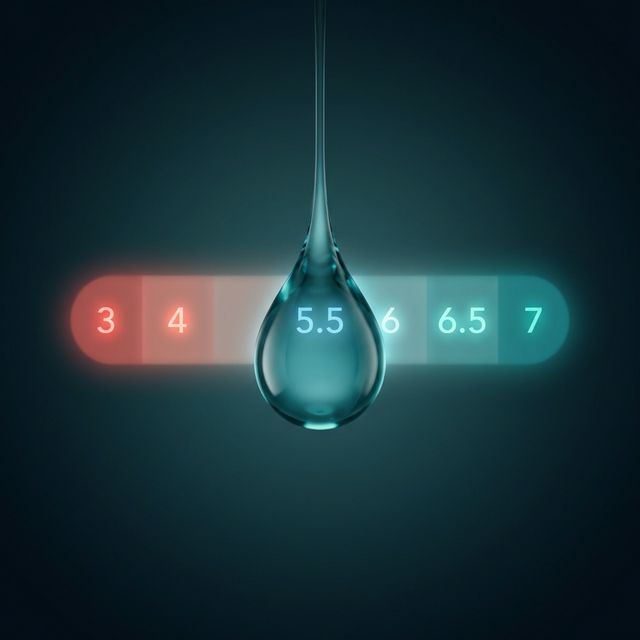
Copper peptides (GHK-Cu) need a pH of 5.5-6.5 to keep copper ions properly bound. Low-pH acids (vitamin C at pH 2.5-3.5, glycolic acid at pH 3.0-4.0, salicylic acid at pH 3.0-4.0) break the copper-peptide bond, releasing free Cu²⁺ ions that become pro-oxidant. According to research in the Journal of Biological Inorganic Chemistry, this releases reactive oxygen species instead of promoting repair. Use acids in AM and copper peptides in PM, or on alternate days.
📖 What Are Copper Peptides?
Copper peptides are short chains of amino acids bound to copper (Cu²⁺) ions. The most studied form is GHK-Cu (glycyl-L-histidyl-L-lysine copper), a naturally occurring tripeptide found in human plasma, saliva, and urine. GHK-Cu signals wound repair, stimulates collagen I and III synthesis, promotes glycosaminoglycan production, and has anti-inflammatory properties. Its copper ion is the active signaling agent, when that bond breaks due to low pH, the peptide becomes ineffective and the free copper becomes a pro-oxidant.
Check if your acids conflict with copper peptides
SkinGuard scans your full routine and flags pH-incompatible combinations instantly
Check Your Routine Free →The pH Problem: How Acids Destroy Copper Peptides
Every skincare ingredient has an optimal pH range. For copper peptides, that range is narrow and non-negotiable. According to a 2018 study in Bioorganic & Medicinal Chemistry (DOI: 10.1016/j.bmc.2018.01.025), the copper-peptide bond in GHK-Cu is stable between pH 5.0 and 7.4. Below pH 4.5, copper begins dissociating from the peptide chain.
What Happens at Low pH
- pH 5.5-6.5 (optimal): Cu²⁺ is tightly bound to the histidine residue in GHK. The peptide functions as intended, signaling collagen synthesis and tissue repair.
- pH 4.0-5.0 (borderline): Bond begins weakening. Copper starts to dissociate partially. Efficacy is reduced but not eliminated. Some retinol formulations fall in this range.
- pH 3.0-4.0 (dangerous): Significant copper dissociation. Free Cu²⁺ ions are released. According to research in Free Radical Biology and Medicine (DOI: 10.1016/j.freeradbiomed.2004.10.010), free copper ions catalyze Fenton-like reactions, producing hydroxyl radicals that damage DNA, lipids, and proteins.
- pH 2.5-3.5 (vitamin C zone): Near-complete dissociation. The peptide is essentially deactivated. Worse: the free copper catalyzes oxidation of L-ascorbic acid itself, turning both ingredients ineffective.
pH Conflict Map: What Clashes With Copper Peptides
| Ingredient | Typical pH | Compatible? | SkinGuard Rule |
|---|---|---|---|
| L-Ascorbic Acid (Vit C) | 2.5-3.5 | ❌ No: mutual degradation | RULE_09 |
| Glycolic Acid (AHA) | 3.0-4.0 | ❌ No: destabilizes Cu²⁺ | RULE_10 |
| Salicylic Acid (BHA) | 3.0-4.0 | ❌ No: too acidic | RULE_10 |
| LHA (Lipo-Hydroxy Acid) | 3.5-4.5 | ❌ No: borderline disruptive | RULE_10 |
| Lactic Acid (mild AHA) | 3.5-4.5 | ⚠️ Risky: time-separate | RULE_10 |
| Retinol | 4.0-6.0 | ⚠️ OK with buffer: wait 20 min | - |
| Niacinamide | 5.0-7.0 | ✅ Yes: pH-compatible | - |
| Hyaluronic Acid | 5.0-7.0 | ✅ Yes: synergistic | - |
| Ceramides | 5.5-6.5 | ✅ Yes: ideal pairing | - |
Copper Peptides + Vitamin C: The Mutual Destruction Problem
This isn't a one-sided conflict. When copper peptides meet vitamin C (L-ascorbic acid), both ingredients suffer:
- Copper peptides lose their copper: The low pH (2.5-3.5) of vitamin C formulations causes Cu²⁺ to dissociate from the peptide chain, eliminating the peptide's signaling function
- Vitamin C gets oxidized faster: According to a study in the Journal of Pharmaceutical Sciences, free copper ions catalyze the oxidation of L-ascorbic acid, accelerating its degradation by 6-10× compared to copper-free conditions
- Pro-oxidant cascade: The released copper ions participate in Fenton chemistry, generating hydroxyl radicals, the exact opposite of what either antioxidant ingredient is supposed to do
SkinGuard's RULE_09 catches this conflict, classifying it as MEDIUM severity with a CHEMISTRY mechanism. The recommendation: use vitamin C in your AM routine and copper peptides in PM.
Copper Peptides + AHA/BHA: The Low pH Trap
AHA (glycolic acid, lactic acid, mandelic acid) and BHA (salicylic acid) operate at pH 3.0-4.5 to effectively break intercellular bonds for exfoliation. This pH range is directly destructive to copper peptide stability.
According to research published in the International Journal of Pharmaceutics (DOI: 10.1016/j.ijpharm.2015.01.048), copper-peptide complexes show a 70% reduction in copper binding at pH 3.5 compared to pH 6.0. At pH 3.0 (typical for a glycolic acid toner) binding drops by over 85%.
The practical implication: even if you wait 30 minutes after applying glycolic acid, the residual low-pH environment on your skin can still destabilize copper peptides applied afterward. According to skin surface pH recovery studies, it takes 1-2 hours for skin pH to return to baseline after acid application.
SkinGuard's RULE_10 flags this combination with MEDIUM severity, covering AHA, BHA, and LHA groups.
Using copper peptides with acids?
SkinGuard detects pH-incompatible pairings across your entire routine, even from different brands
Scan Your Products Free →The Correct Schedule: When to Use Copper Peptides
The golden rule: copper peptides go in the step where pH is closest to skin's natural 5.5. Here's the dermatologist-recommended approach:
Strategy 1: AM/PM Split
| Time | Step | pH Range |
|---|---|---|
| AM | Vitamin C serum → Moisturizer → SPF | 2.5-3.5 → 5.5-6.5 |
| PM | Cleanse → Copper peptide serum → Moisturizer | 5.5-6.5 throughout |
Strategy 2: Alternating Nights
| Night | Active | Notes |
|---|---|---|
| Monday | AHA/BHA toner or peel | No copper peptides |
| Tuesday | Copper peptide serum | pH fully recovered from acid |
| Wednesday | Retinol | Compatible, wait 20 min before peptides |
| Thursday | Copper peptide serum | Recovery night |
| Friday | AHA/BHA | No copper peptides |
| Saturday | Copper peptide serum | Full repair focus |
| Sunday | Hydration only | Rest night |
What Works Well With Copper Peptides
Not everything conflicts with copper peptides. According to clinical research, these ingredients are synergistic or neutral:
- Hyaluronic acid: pH-compatible (5-7), provides hydration that supports copper peptide penetration. According to a study in Skin Pharmacology and Physiology, the combination improved skin hydration by 34% more than either ingredient alone
- Ceramides: Ideal pH match (5.5-6.5) and complementary mechanism, copper peptides stimulate collagen while ceramides reinforce the lipid barrier
- Niacinamide: pH-compatible (5-7), both target anti-aging pathways through different mechanisms. No competitive inhibition
- Centella Asiatica (cica): pH-neutral, anti-inflammatory properties complement copper peptide's wound-healing signaling
- Squalane: Oil-phase ingredient, doesn't affect pH environment. Helps lock in copper peptide benefits
How SkinGuard Catches Copper Peptide Conflicts
SkinGuard's conflict engine uses two specific rules for copper peptide detection:
- RULE_09. Vitamin C × Copper Peptides: MEDIUM severity, CHEMISTRY mechanism. Flags VITAMIN_C_PURE with PEPTIDES_COPPER. Detects the mutual degradation problem where both ingredients lose efficacy
- RULE_10. Copper Peptides × AHA/BHA/LHA: MEDIUM severity, CHEMISTRY mechanism. Flags PEPTIDES_COPPER with AHA, BHA, and LHA groups. Detects pH-driven copper dissociation
Our ingredient database covers 28,705+ substances, including multiple copper peptide forms: GHK-Cu, AHK-Cu, copper tripeptide-1, and copper gluconate. Even if a product lists "copper tripeptide-1" instead of "GHK-Cu," SkinGuard identifies it as PEPTIDES_COPPER and applies the same conflict rules.
Related Reading
- 🔗 Vitamin C Mixing Guide, What you can and can't layer with vitamin C
- 🔗 Retinol + AHA Conflict, Another pH-driven conflict pair
- 🔗 Niacinamide + Vitamin C: Myth Busted, A conflict that turned out to be safe
- 🔗 AHA vs BHA vs PHA Guide, Understanding acid types and their pH ranges
Frequently Asked Questions
Can you use copper peptides with vitamin C?
Not in the same routine step. Pure vitamin C (L-ascorbic acid) operates at pH 2.5-3.5, which destabilizes copper peptide bonds. According to research in the Journal of Biological Inorganic Chemistry, Cu²⁺ ions released by pH disruption can also catalyze vitamin C oxidation, reducing both ingredients' efficacy. Use vitamin C in AM and copper peptides in PM.
Can you use copper peptides with retinol?
Yes, with caution. Retinol doesn't operate through low pH like acids do. However, some retinol formulations are buffered at pH 4-5, which is borderline for copper peptide stability. Apply retinol first, wait 15-20 minutes, then apply copper peptides. Or use on alternate nights.
What is GHK-Cu and how does it work?
GHK-Cu (glycyl-L-histidyl-L-lysine copper) is a naturally occurring copper tripeptide. It signals wound repair, collagen synthesis, and anti-inflammatory pathways. Its copper ion is bound at pH 5.5-7.4. Below pH 4.5, the copper-peptide bond weakens, releasing free Cu²⁺ ions that become pro-oxidant instead of regenerative.
What pH do copper peptides need?
Copper peptides are most stable and effective at pH 5.5-6.5, close to the skin's natural pH. Below pH 4.5, the copper ion begins to dissociate from the peptide chain. Below pH 3.5, dissociation is significant and the released copper ions become pro-oxidant, potentially causing more harm than benefit.
Does SkinGuard detect copper peptide conflicts?
Yes. SkinGuard uses two rules: RULE_09 flags copper peptides with pure vitamin C (stability/efficacy reduction), and RULE_10 flags copper peptides with AHA, BHA, and LHA (low pH destabilizes copper peptide bonds). Both are MEDIUM severity CHEMISTRY conflicts.
Know your pH conflicts before they damage your skin
SkinGuard scans ingredients, checks pH compatibility, and flags conflicting combinations, so you don't have to memorize chemistry.
Download SkinGuard Free →Free for iOS • No account required • 28K+ ingredients
⚕️ This article is for educational purposes only and does not replace medical advice. If you experience persistent skin irritation, consult a board-certified dermatologist. SkinGuard is a cosmetic ingredient analysis tool, not a medical device.