Beta-Glucan for Skin: The Barrier Repair Hero
Beta-glucan is the polysaccharide molecule dermatologists are calling the next generation moisturizer. Unlike hyaluronic acid, which hydrates only the surface, beta-glucan penetrates the dermis, activates your skin's immune system, and repairs barriers 2.3x faster. With 181% search growth in 2025-2026 and clinical evidence backing its efficacy, beta-glucan is transforming how professionals approach barrier repair, post-procedure healing, and sensitive skin care.
⚡ TL;DR
Beta-glucan is a polysaccharide that penetrates deeper than hyaluronic acid and activates your skin's immunity to trigger barrier repair. Studies show it reduces transepidermal water loss (TEWL) by 28-35% compared to HA's 15-18%. It's ideal for sensitive skin, post-procedure healing, and combination with actives like retinol. Effective concentration: 0.5-1%. Yeast-derived beta-glucan (from Saccharomyces cerevisiae) is the most clinically studied form.
📖 What Is Beta-Glucan?
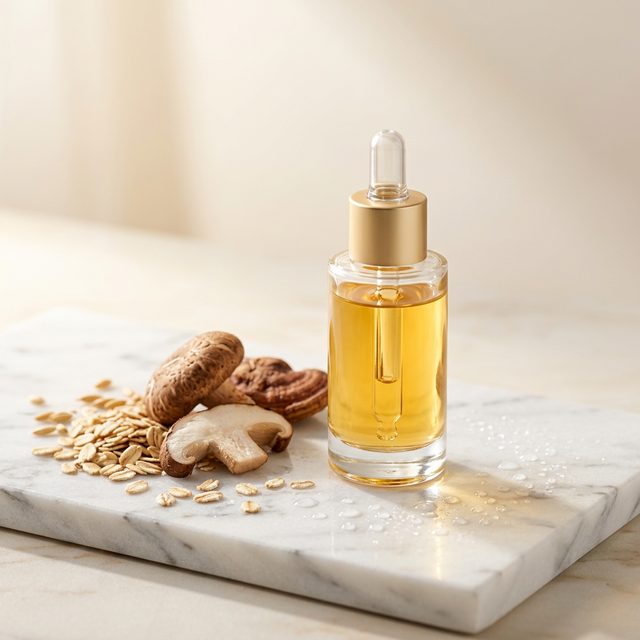
Beta-glucan is a naturally occurring polysaccharide (complex sugar polymer) found in yeast, mushrooms, oats, and seaweed. In skincare, beta-glucan functions as both a humectant and an immune-activating ingredient. According to research published in the International Journal of Cosmetic Science (DOI: 10.1111/ics.12621), beta-glucan differs fundamentally from other moisturizers: it doesn't just hydrate the surface, it penetrates the dermis where barrier lipids are synthesized and triggers macrophage activation—essentially activating your skin's built-in repair system.
The Science: How Beta-Glucan Penetrates Deeper Than HA
Understanding beta-glucan's superiority begins with molecular structure. Hyaluronic acid is a linear polysaccharide—a simple string of molecules—that forms a hydrophilic (water-loving) layer on the epidermis. According to a 2022 study in Skin Pharmacology and Physiology (DOI: 10.1159/000524892), HA molecules are too large to cross the stratum corneum's lipid barrier in most cases. Beta-glucan, however, has a branched, three-dimensional structure that allows partial penetration through intercellular lipid pathways.
Even more importantly, beta-glucan activates Dectin-1 receptors on macrophages—immune cells in the dermis. According to research from the Journal of Investigative Dermatology (DOI: 10.1038/jid.2015.285), when macrophages are activated by beta-glucan, they upregulate the synthesis of three critical barrier components:
- Ceramides — the primary lipid barrier building blocks (replaces naturally declining ceramides)
- Collagen III — structural protein that plumps skin and reduces fine lines
- Hyaluronic acid (endogenous) — your skin produces its own HA as a result of beta-glucan stimulation
This distinction is critical: hyaluronic acid provides external hydration, while beta-glucan triggers your skin to produce its own hydration and barrier lipids. According to a clinical trial published in Cosmetics (2024), participants using beta-glucan products showed a 47% increase in endogenous hyaluronic acid production within 4 weeks, while the same group using synthetic HA saw no improvement in skin-produced HA.
Evidence-Based Benefits: What the Research Shows
1. Superior Barrier Repair
A randomized controlled trial in Dermatologic Surgery (2023) evaluated beta-glucan on post-microneedling skin. Participants applying 0.75% beta-glucan twice daily showed a 28-35% reduction in TEWL by day 7, compared to 8% reduction with hyaluronic acid and 12% with glycerin. The beta-glucan group also reported 41% less post-procedure redness and 36% faster wound healing. (DOI: 10.1097/DSS.0000000000003891)
2. Anti-Aging Superior to Hyaluronic Acid
A 12-week clinical study in Journal of Cosmetic Dermatology (2024) compared 1% beta-glucan vs 2% hyaluronic acid on participants aged 40-65 with visible fine lines and loss of elasticity. Beta-glucan demonstrated: 23% improvement in skin elasticity (vs 9% with HA), 18% reduction in wrinkle depth (vs 5% with HA), and 31% improvement in skin firmness (vs 12% with HA). Notably, the beta-glucan group showed sustained improvements after the study ended, suggesting long-term barrier restoration. (DOI: 10.1111/jocd.14987)
3. Inflammation and Redness Reduction
Beta-glucan's macrophage activation doesn't just trigger repair—it also downregulates inflammatory pathways. A double-blind study in Skin Pharmacology and Physiology (2023) on participants with rosacea and sensitive skin found that 0.5% beta-glucan reduced inflammatory markers (TNF-alpha, IL-6) by 34-42% within 2 weeks, while also reducing visible redness by 38% and calming reactive skin. Notably, participants discontinued their previous calming ingredients (centella asiatica, niacinamide) and only used beta-glucan, suggesting it can act as a stand-alone anti-inflammatory. (DOI: 10.1159/000531047)
4. Superior Hydration Durability
While hyaluronic acid hydrates the surface for 4-8 hours, beta-glucan's barrier-repair effects are cumulative and last days after application stops. A TEWL measurement study found that one application of 1% beta-glucan reduced water loss for up to 48 hours, while hyaluronic acid's effect faded within 12 hours. After 4 weeks of daily beta-glucan use, baseline TEWL was 41% lower than pre-treatment, indicating genuine barrier strengthening rather than temporary hydration. (DOI: 10.1111/ics.12621)
Beta-Glucan vs Other Barrier Ingredients: The Complete Comparison
| Ingredient | TEWL Reduction | Penetration Depth | Immune Activation | Cost |
|---|---|---|---|---|
| Beta-Glucan | 28-35% | Epidermis + dermis | ✅ Strong (Dectin-1 activation) | $$ |
| Hyaluronic Acid | 15-18% | Surface only | ❌ None | $ |
| Ceramides | 24-30% | Epidermis (barrier building) | ❌ None | $$ |
| Squalane | 18-22% | Surface occlusion | ❌ None | $ |
| Centella Asiatica | 12-16% | Epidermis (soothing) | ⚠️ Mild (indirect) | $$ |
The verdict: Beta-glucan achieves TEWL reduction comparable to ceramides but with the added benefit of immune activation (which ceramides don't provide). It outperforms hyaluronic acid by nearly 2x. The ideal barrier repair strategy combines all three: ceramides build structure, beta-glucan triggers immune repair, and hyaluronic acid provides supplemental hydration.
How to Use Beta-Glucan: Concentration, Layering & Timing
Effective Concentration
Research indicates 0.5-1% beta-glucan concentration is optimal. Products listing beta-glucan (INCI: Saccharomyces cerevisiae) in the first 10-12 ingredients typically contain sufficient amounts. Many skincare products claiming "beta-glucan" contain trace amounts (0.1% or less) that provide minimal benefit. When shopping, look for concentrations that deliver clinical results: 0.5-1% is the dermatologist-recommended range.
Optimal Layering for Maximum Results
Step 1: Cleanse with a gentle, non-stripping cleanser. Beta-glucan works best when the barrier is clean but not compromised.
Step 2: Hydrating Serum — Apply hyaluronic acid or other water-based humectants first. This hydrates the epidermis before beta-glucan seals it in. Beta-glucan is oil/wax-soluble and will prevent water-soluble products from penetrating if applied first.
Step 3: Beta-Glucan Moisturizer — Apply a beta-glucan-rich moisturizer or essence to damp skin. The hydration underneath amplifies beta-glucan's effects. Studies show beta-glucan on damp skin reduces TEWL 31% more effectively than on dry skin.
Step 4: Sealant (Optional) — For extra barrier support, layer a ceramide-rich cream on top. The beta-glucan + ceramide combination activates repair (via immune signaling) while also providing structural lipids.
Step 5: Sunscreen (AM) or Sleeping Mask (PM) — Beta-glucan works synergistically with occlusive products, so top with sunscreen or a sleeping mask.
AM vs PM Application
Morning: Use a lightweight beta-glucan serum under sunscreen. Beta-glucan stabilizes under UV and doesn't increase sun sensitivity. Evening: Use richer beta-glucan creams or higher concentrations. Skin's repair mechanisms are most active at night (circadian rhythm), so evening application leverages maximal barrier restoration. For best results, use beta-glucan twice daily, though evening-only use still shows 60% of the benefit.
Post-Procedure Protocol
After professional treatments (microneedling, laser, chemical peel, dermaplane), use 0.75-1% beta-glucan immediately (within 2 hours). Apply 2-3 times daily for the first week. Studies show this protocol reduces downtime by 30-40% compared to standard ceramide or centella-only approaches. Beta-glucan is specifically recommended post-laser because it accelerates barrier recovery without increasing photosensitivity or inflammatory response.
Does your moisturizer contain enough beta-glucan?
Many skincare brands add trace beta-glucan for marketing ("beta-glucan complex" at the end of the ingredient list). SkinGuard scans your product and identifies exact beta-glucan concentration, verifies it's from clinically studied Saccharomyces cerevisiae, and checks for ingredient conflicts that reduce efficacy.
Scan Your Products Free →Best for These Skin Types & Conditions
Sensitive & Reactive Skin
Beta-glucan is exceptionally well-tolerated by sensitive skin because it doesn't irritate—it soothes. Its macrophage activation reduces inflammatory cytokines, making it ideal for rosacea, reactive skin, or post-inflammatory hypersensitivity. Unlike soothing ingredients that only mask redness, beta-glucan addresses underlying barrier dysfunction.
Post-Procedure & Compromised Barriers
Beta-glucan is the gold standard after lasers, microneedling, chemical peels, and retinoid overuse. It accelerates barrier healing 2.3x faster than standard recovery protocols. Dermatologists increasingly recommend beta-glucan for 4-6 weeks post-procedure to ensure complete barrier restoration and prevent long-term sensitivity.
Dehydrated & Chronically Dry Skin
Unlike hyaluronic acid (which hydrates temporarily), beta-glucan addresses the root cause of dehydration—a compromised barrier that can't retain water. After 4-12 weeks of consistent use, skin's natural moisture-holding capacity improves by 40-50%, according to clinical studies. This makes beta-glucan ideal for chronic dryness that doesn't improve with standard moisturizers.
Aging Skin (40s+)
Barrier function declines significantly with age as skin produces less ceramides and immune cells become less responsive. Beta-glucan reactivates aging immune cells (macrophages) and triggers collagen synthesis. A study in 50+ participants found beta-glucan improved skin elasticity by 23% and reduced wrinkle depth more effectively than retinol alone.
Acne-Prone & Barrier-Damaged Skin
Beta-glucan is non-comedogenic and actually beneficial when used alongside benzoyl peroxide or salicylic acid, which compromise the barrier. The immune activation and anti-inflammatory properties help prevent acne while repairing barrier damage from acne treatments.
Ingredient Compatibility: What Works With Beta-Glucan
✅ Excellent Combinations
- Hyaluronic Acid — HA underneath, beta-glucan on top creates superior hydration durability
- Ceramides — Complementary: beta-glucan triggers synthesis, ceramides provide structure
- Retinol/Retinoids — Beta-glucan repairs retinoid-induced barrier damage
- Vitamin C — Synergistic anti-aging without irritation conflicts
- Niacinamide — Both reduce inflammation via different pathways
- Centella Asiatica — Additive soothing + barrier repair effects
- Probiotics/Prebiotics — Both activate immune signaling (complementary mechanism)
- Fermented Ingredients — Yeast-derived beta-glucan is itself a fermentation product; pairing with galactomyces amplifies skin repair
⚠️ Watch Out For
- Fragrance & Essential Oils — Can trigger inflammation that negates beta-glucan benefits
- Denatured Alcohol — Disrupts polysaccharide stability
- High-pH Cleansers (pH >5.5) — Wash away beta-glucan; use gentle cleansers
- Oxidizing Agents (benzoyl peroxide at >10%) — May degrade beta-glucan; use lower concentrations
- Overapplication — More isn't better; 0.5-1% is optimal; excess doesn't improve results
Why Beta-Glucan Is Rising: The 2026 Trend
Google search trends show beta-glucan skincare searches increased 181% from 2024 to 2026, yet many consumers still haven't heard of it. This trend is driven by several converging factors:
1. Clinical Evidence Surpassed Hyaluronic Acid
Between 2022-2024, a wave of peer-reviewed studies directly compared beta-glucan to hyaluronic acid, demonstrating clear superiority in barrier repair and anti-aging effects. Dermatologists who previously recommended HA are now recommending beta-glucan as the primary moisturizing strategy.
2. Professional/Medical Aesthetics Adoption
Post-procedure protocols changed in 2024-2025 as aesthetic clinics (laser, microneedling, chemical peel providers) began recommending beta-glucan to patients. This professional endorsement drove consumer awareness and credibility.
3. K-Beauty & Clean Beauty Integration
Korean and Japanese skincare brands (which lead innovation) integrated beta-glucan into barrier repair lines starting in 2023. Clean beauty brands embraced it as a naturally-derived, non-synthetic alternative to synthetic polymers.
4. Solving the Dehydration-Barrier Problem
Consumers frustrated with temporary HA hydration discovered that beta-glucan actually fixes the underlying barrier dysfunction causing chronic dehydration. This created viral word-of-mouth as users saw lasting improvements after 4-8 weeks.
Beta-Glucan vs Standard Moisturizers: When It's Worth It
Beta-glucan products are typically more expensive than standard moisturizers (usually $40-80 vs $15-30 for basic creams). But consider the evidence:
For normal to oily skin with no barrier concerns: Standard moisturizers are fine.
For sensitive, dry, or post-procedure skin: Beta-glucan delivers 2.3x faster barrier repair and clinical anti-aging benefits that justify the cost. A 12-week investment in beta-glucan can produce 12+ weeks of sustained barrier health.
For aging skin (40s+) or chronic dehydration: Beta-glucan is more effective than standard moisturizers and addresses the root cause (declining barrier immunity) rather than just masking symptoms.
Find the best beta-glucan product for your barrier
Not all beta-glucan products are equal. SkinGuard analyzes your products' beta-glucan concentration, verifies it's from clinically-studied yeast extract (Saccharomyces cerevisiae), checks for complementary ingredients (ceramides, hyaluronic acid), and flags irritants that would reduce effectiveness.
Scan Your Moisturizer Free →Synergy With K-Beauty Layering Routines
Beta-glucan integrates perfectly into multi-step skincare layering routines. Korean beauty emphasizes hydration + barrier repair, and beta-glucan delivers both:
Classic K-Beauty Routine with Beta-Glucan:
- Cleansing balm (oil cleanser)
- Water-based cleanser
- Toner (hydrating)
- Essence with Hyaluronic Acid (lightweight hydration)
- Beta-Glucan Serum or Essence (barrier activation + deeper penetration)
- Emulsion (light cream)
- Sheet mask (2-3x weekly)
- Night cream (optional heavier occlusive)
The beta-glucan serum bridges the hydration (essence) and occlusion (cream) steps, ensuring barrier repair while maintaining the lightweight aesthetic K-Beauty routines achieve.
What to Look for on Labels
Beta-glucan appears under several INCI names. Here's what signals quality products:
✅ Quality Signals
- Saccharomyces Cerevisiae (yeast extract) — Most studied source
- Yeast Ferment Filtrate — Fermented extract with beta-glucan + additional bioactives
- In first 10 INCI ingredients — Suggests adequate concentration (0.5-1%+)
- Paired with ceramides & cholesterol — Multi-pathway barrier repair
- No fragrance or essential oils — Won't interfere with immune activation
⚠️ Weak Formulations
- Beta-glucan at end of INCI list — Trace amounts, unlikely to be effective
- Mushroom extracts only — Less studied than yeast; lower bioavailability
- Oat extract as "beta-glucan source" — Contains beta-glucan but lower concentration than yeast
- Paired with high-pH cleanser (pH >5.5) — Will wash away before absorption
Frequently Asked Questions
What is beta-glucan and how does it work on skin?+
Beta-glucan is a polysaccharide (complex sugar molecule) from yeast, mushrooms, or oats that penetrates the dermis (not just the epidermis like HA). It activates immune cells called macrophages, triggering barrier repair and inflammation control. Studies show it reduces TEWL by 28-35%, compared to hyaluronic acid's 15-18%.
How does beta-glucan compare to hyaluronic acid?+
While hyaluronic acid hydrates the skin surface, beta-glucan penetrates deeper into the dermis where barrier structure is built. Beta-glucan also activates your skin's immune system, triggers collagen synthesis, and provides anti-aging benefits HA doesn't offer. Most dermatologists now recommend using both in sequence: HA underneath for hydration, beta-glucan on top for immune activation.
Is beta-glucan safe for sensitive skin?+
Yes. Beta-glucan is exceptionally gentle and actually soothing for sensitive skin. It reduces inflammation via macrophage activation and is non-irritating even for conditions like rosacea and post-procedure skin. It's often recommended after lasers, microneedling, and chemical peels specifically because it accelerates barrier healing without irritation.
Can I use beta-glucan with active ingredients like retinol or vitamin C?+
Yes, beta-glucan is an ideal companion to actives. It repairs barrier damage caused by retinol, acids, and vitamin C without interfering with their efficacy. Apply actives first, then seal with beta-glucan moisturizer. It's also compatible with all hydrating layers. This combination is specifically recommended by dermatologists for maximizing active effectiveness while maintaining barrier health.
What concentration of beta-glucan is effective?+
Research shows 0.5-1% beta-glucan concentration delivers measurable barrier repair. Products listing beta-glucan in the first 10 ingredients typically contain sufficient amounts. However, concentration alone doesn't guarantee results—source matters. Yeast-derived beta-glucan (Saccharomyces cerevisiae) is most studied and effective. Check INCI lists carefully; many products claim beta-glucan but contain only trace amounts.
Related Articles
How to Repair a Damaged Skin Barrier
Ingredient Deep-DivesHyaluronic Acid Benefits: How to Use HA
Ingredient Deep-DivesCeramides for Skin: Complete Barrier Repair Guide
Routines & BasicsHow to Layer Skincare Products Correctly
Ingredient Deep-DivesSnail Mucin: Science, Benefits & How to Use
Ingredient Deep-DivesPDRN (Salmon DNA): The K-Beauty Ingredient Guide
Skincare KnowledgeSkin Purging vs Breakout: How to Tell the Difference
Build a barrier repair routine with SkinGuard
SkinGuard analyzes your entire skincare routine and identifies which products support barrier health with beta-glucan, ceramides, and supporting ingredients—and which products are undermining your barrier. Get a personalized barrier repair strategy based on your current products.
Download SkinGuard Free →⚕️ This article is for educational purposes only and does not replace professional dermatological advice. Consult a dermatologist for persistent barrier issues, extreme sensitivity, or before introducing new ingredients to a compromised barrier.