Skin Purging vs Breakout: How to Tell the Difference
⚡ TL;DR
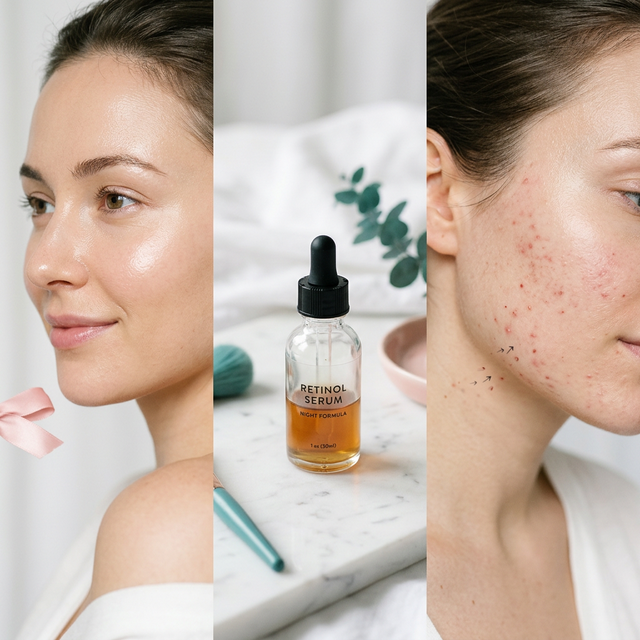
Purging: Temporary (3–8 weeks), appears on acne-prone areas, follows exfoliating actives (retinol, AHA, BHA), looks like whiteheads/blackheads. Breakout: Indefinite duration, appears anywhere on face, triggered by irritation or clogged products, looks like inflamed pustules or cysts. Purging is normal; allergic reactions are not. If breakouts persist beyond 8 weeks, stop the product immediately.
📖 What Is Skin Purging?
Skin purging is a temporary increase in breakouts caused by accelerated cell turnover from exfoliating actives (retinol, retinoids, AHA, BHA, vitamin C at low pH). During purging, microcomedones—invisible clogged pores in the early stages of formation—are brought to the skin surface faster than normal, creating visible whiteheads and blackheads. This is not an allergic reaction or product failure; it's your skin clearing out clogged pores. According to dermatology research, purging is a natural part of the skin's adaptation to cell-turnover accelerators and typically lasts 3–8 weeks before improving dramatically.
The Science: Why Purging Happens
Your skin surface is constantly renewing. Normally, dead cells from the stratum corneum (the outermost layer) shed gradually over 28–30 days. Clogged pores—where sebum, bacteria, and dead cells accumulate—form microcomedones deep within the follicle, invisible to the naked eye.
When you introduce an exfoliating active, the process changes. According to Kligman (1986) in the Journal of the American Academy of Dermatology (DOI: 10.1016/s0190-9622(86)70214-0), retinoids accelerate keratinocyte turnover in the basal layer by activating retinoic acid receptors (RAR/RXR), increasing cell division and pushing new cells to the surface 2–3 times faster than normal.
Similarly, Ditre et al. (1996) in the Journal of the American Academy of Dermatology (DOI: 10.1016/s0190-9622(96)90602-8) demonstrated that alpha hydroxy acids (AHAs) dissolve the intercellular "glue" (desmosomes) between dead skin cells, promoting exfoliation at concentrations above 4% and pH below 4.0.
This acceleration means microcomedones that would have taken months to surface are now brought up within weeks—appearing as whiteheads, blackheads, or small pustules. Your skin isn't "breaking out"; it's expelling pre-existing congestion. This process is:
- Predictable: Appears after 1–2 weeks of using the active, peaks at week 3–4, subsides by week 6–8
- Location-specific: Appears on your normally acne-prone areas (T-zone, chin, cheeks) where microcomedones already exist
- Product-specific: Only triggered by cell-turnover accelerators, not from moisturizers or cleansers
- Temporary: Resolves within 8 weeks if you continue the product, leaving clearer, smoother skin
Purging vs Breakout: Side-by-Side Comparison
The fastest way to distinguish purging from a true breakout is to examine these five criteria:
| Criterion | Purging | Breakout |
|---|---|---|
| Timeline | 3–8 weeks, then improves | Indefinite, persists or worsens |
| When it starts | 1–2 weeks after introducing active | Can happen immediately or anytime |
| Location | Only on acne-prone areas (T-zone, chin) | Appears randomly anywhere on face |
| Type of blemish | Small whiteheads, blackheads, tiny pustules | Large red pustules, cysts, inflamed papules |
| Trigger | Retinol, retinoids, AHA, BHA, vitamin C (low pH) | Comedogenic product, irritant, allergic reaction |
| Associated symptoms | Mild dryness, slight redness, no itching | Itching, burning, hives, swelling, or extreme sensitivity |
| Texture after | Skin becomes smoother, clearer at week 8+ | Acne scars, PIE, persistent congestion |
Which Ingredients Cause Purging?
Not all active ingredients cause purging. Only those that accelerate cell turnover trigger the purging cycle. Here's the science-backed breakdown:
Ingredients That DO Cause Purging
- Retinol & Retinoids (Tretinoin, Adapalene, Retinaldehyde): The most common purging trigger. Activate retinoic acid receptors, accelerating basal layer turnover by 2–3×. Start at 0.025% (tretinoin) or 0.5% (OTC retinol), use 1–2× weekly for first 2–4 weeks.
- AHAs (Glycolic Acid, Lactic Acid, Mandelic Acid): Dissolve intercellular bonds. Glycolic acid (smallest molecule, deepest penetration) causes most purging. Start with 5–7% concentration, 2–3× weekly. Lactic acid (larger molecule, gentler) causes milder purging. Lactic acid (larger molecule, gentler) causes milder purging.
- BHAs (Salicylic Acid): Oil-soluble, penetrates pores directly. Causes deep purging (especially on oily skin). Start with 0.5–2% concentration, 2–3× weekly. Wait 1 week of acclimation before increasing frequency.
- Vitamin C (L-ascorbic acid at low pH <3.5): Acts as a mild exfoliant while providing antioxidant benefits. Lower concentrations (5–10%) cause less purging than high-dose serums (15–20%). Purging appears after 2–3 weeks.
Ingredients That DO NOT Cause Purging
If you're breaking out from these, the product is irritating or comedogenic—stop immediately:
- Moisturizers, Ceramides, Hyaluronic Acid: These hydrate and strengthen the barrier. Breakouts from moisturizers indicate comedogenicity (product clogs pores) or an allergy.
- Cleansers (Gel, Foam, Oil): Should never cause purging. Breakouts suggest your cleanser strips the barrier or leaves residue, triggering irritation.
- Niacinamide: Regulates sebum and reduces inflammation. Rarely causes purging; breakouts usually indicate an allergy or overuse.
- Peptides, Growth Factors: Support barrier function. Do not accelerate cell turnover, so purging shouldn't occur.
- Fragrance, Essential Oils: Common irritants but do not cause cell-turnover purging. Breakouts indicate sensitivity or allergy.
Purging follows a predictable pattern. If breakouts don't follow this timeline, it's not purging.
Week 1–2: Initial microcomedones surface (few visible breakouts). Week 3–4: Purging peaks (maximum breakouts visible). Week 5–8: Inflammation subsides, skin texture improves. Week 9+: If breakouts persist, stop the product and consult a dermatologist.
The Purging Timeline: What to Expect Week by Week
Understanding the timeline helps you decide whether to continue or stop a product. Here's what clinical evidence shows:
Weeks 1–2: Initial Purging ("The Early Days")
What happens: Microcomedones deep in follicles begin rising toward the surface. Skin may feel slightly dry or sensitive. Visible breakouts are minimal.
What you'll notice: A few small whiteheads or blackheads, especially on the T-zone. Skin may feel slightly tender.
What to do: Continue the active. Use every 3 days instead of nightly if irritation appears. Ensure moisturizer is applied after each use. Do not add other actives.
Weeks 3–4: Peak Purging ("The Breakout Peak")
What happens: Microcomedones reach the epidermis. Sebum, bacteria, and dead cells are expelled. Visible breakouts peak during this window.
What you'll notice: The most breakouts you'll see. Small whiteheads, blackheads, and tiny red pustules covering the T-zone and chin. Skin may be slightly dry or flaky. Redness around blemishes is normal.
What to do: This is the hardest week. Do NOT stop. Continue the active (even at reduced frequency if needed). Avoid touching or picking blemishes. Apply SPF 30+ daily (the active increases UV sensitivity). Use a lightweight moisturizer after each application.
Weeks 5–8: Resolution ("The Recovery")
What happens: Purging cycle completes. Microcomedones have been expelled. Skin begins producing fresh, clear cells from below.
What you'll notice: Breakouts decrease week-by-week. Texture improves. Skin appears smoother, clearer, and more radiant. Redness fades. Some residual hyperpigmentation (PIH, post-inflammatory hyperpigmentation) may remain but fades over weeks.
What to do: Continue the active at your target frequency (e.g., retinol 2–3× weekly). Gradually increase frequency if tolerated. Do not overuse (more is not better).
Red Flags: When to Stop a Product Immediately
Purging is temporary and normal. However, certain signs indicate a true allergic reaction or product incompatibility—stop immediately and consult a dermatologist:
- Swelling or hives: If your face, lips, or eyelids swell, or hives appear, this is an allergic reaction, not purging. Stop immediately.
- Severe burning or itching: Mild stinging is normal when applying actives. Severe, persistent burning suggests irritation or allergy. Stop and rinse thoroughly.
- Breakouts last beyond 8 weeks: If blemishes don't improve by week 8, the product is not purging—it's causing acne. Stop and try a gentler alternative.
- Breakouts appear outside acne-prone areas: Purging happens only where microcomedones exist (usually T-zone, chin). If breakouts appear on cheeks, forehead, or jawline only, it's not purging.
- Cystic acne appears (30%+ of face covered): Severe purging can happen, but if large cysts form in clusters, the product may be too strong. Reduce frequency or concentration.
- Raw, cracked, or bleeding skin: This indicates barrier damage, not purging. Stop immediately and use barrier-repair products (ceramides, hyaluronic acid).
How to Minimize Purging: 4 Evidence-Based Strategies
Purging is inevitable when starting cell-turnover actives, but you can reduce severity and duration. Here's what dermatology research shows:
Strategy 1: Slow Introduction ("Low & Slow")
The most important strategy. Instead of using an active every night, start at the lowest frequency and concentration, then gradually increase.
For Retinol: Start with 0.025% strength, 1× weekly for 2 weeks. Increase to 2× weekly after week 2 if well tolerated. Move to 3× weekly by week 6. Do not exceed 3–4× weekly.
For AHA: Start with 5–7% concentration, 2× weekly for 1 week. Increase to 3× weekly by week 3. Stop at 3–4× weekly maximum.
For BHA: Start with 1% concentration, 2× weekly. Increase to 3× weekly by week 2. Maximum 4–5× weekly for experienced users.
Strategy 2: The Buffer Method
Apply moisturizer first, then the active, then another layer of moisturizer. This "sandwich" slows penetration and reduces irritation without preventing purging. According to research, buffering reduces inflammation severity while maintaining efficacy.
Application order: Cleanser → Toner → Moisturizer → Active (retinol/AHA/BHA) → Moisturizer → SPF (AM) or Occlusive (PM)
Strategy 3: Skin Cycling / Active Rotation
Do not combine multiple actives. Instead, rotate them on different nights to minimize total stress on the barrier.
Example rotation: Monday (Retinol) → Tuesday (Rest/Hydration) → Wednesday (AHA) → Thursday (Rest) → Friday (Retinol) → Weekend (Rest + Moisturizing)
This allows the barrier to recover between active applications while still exposing skin to multiple beneficial ingredients.
Strategy 4: Dose Reduction During Purging
If purging is severe (many pustules, excessive redness), you can reduce frequency temporarily without stopping completely.
Example: Planned to use retinol 2× weekly, but purging is intense. Drop to 1× weekly for 2 weeks, then resume 2× weekly. Purging will last slightly longer but will be less severe.
Safe Ingredients That Never Cause Purging
If you have sensitive skin or are concerned about purging, these ingredients deliver skin benefits without triggering a purge cycle:
- Niacinamide (Vitamin B3): Reduces sebum, minimizes pores, strengthens barrier. Safe for all skin types. Start at 4–5% concentration.
- Centella Asiatica (Cica): Anti-inflammatory, heals compromised barriers. Calms purging-related inflammation when combined with retinol.
- Hyaluronic Acid: Hydrates without barrier disruption. Use 1% concentration for maximum hydration.
- Ceramides (Ceramide NP, AP, EOP): Strengthen the stratum corneum, reduce TEWL. Use 1–5% concentration.
- Peptides (Matrixyl, Argireline): Support skin firmness and elasticity. Safe with all other ingredients.
- Azelaic Acid (10–20%): Gentle, anti-inflammatory, anti-bacterial. Rarely causes purging; great for rosacea and redness.
Frequently Asked Questions
How long does skin purging last?
Typical purging lasts 3–8 weeks when using new actives like retinol or AHA. Week 1–2: initial microcomedones surface. Week 3–4: visible breakouts peak. Week 5–8: inflammation subsides, skin texture improves. If breakouts persist beyond 8 weeks, it's not purging—stop the product.
Does retinol cause purging?
Yes. Retinol accelerates cell turnover, pushing microcomedones (invisible clogged pores) to the surface 2–3 weeks after you start. This is purging, not an allergic reaction. Start retinol at 0.025% or lower, use 1–2× weekly, and introduce it slowly over 4–6 weeks.
Is skin purging normal when starting a new skincare product?
Purging is normal when using exfoliating actives (retinol, retinoids, AHA, BHA, vitamin C at low pH). It's NOT normal from moisturizers, cleansers, or oils—if you experience breakouts from those, the product is irritating or comedogenic. Stop immediately.
How do you tell if it's purging or an allergic reaction?
Purging: appears on normally acne-prone areas (T-zone, chin), looks like small whiteheads/blackheads, lasts 3–8 weeks, follows active ingredients. Allergic reaction: appears randomly, includes hives/itching/swelling, lasts indefinitely until you stop, can happen from any product type. Stop immediately if swelling occurs.
Should you stop using a product if your skin is purging?
No, unless purging is severe (cystic acne covering 30%+ of face) or lasts beyond 8 weeks. Mild-to-moderate purging indicates the product is working. Use shorter contact times, apply every 3–4 days instead of nightly, buffer with moisturizer, and ensure you're using SPF 30+ daily. If it's a true allergic reaction, stop immediately.
📖 Related Articles
How to Start Retinol: Dosage & Timeline for Beginners
Learn the evidence-based retinol introduction schedule to minimize purging and irritation.
Tretinoin vs Retinol: Key Differences Explained
Prescription retinoid strength, purging intensity, and when to choose each one.
AHA vs BHA vs PHA: Which Acid Is Right for You?
Complete comparison of chemical exfoliants, purging timelines, and combinations.
Salicylic Acid (BHA) Guide: Dosage, Timeline & Side Effects
How to use BHA without overexfoliation; purging vs irritation from salicylic acid.
Skin Cycling & Active Rotation: The Science-Backed Schedule
Combine retinol, AHA, and BHA safely by rotating them on different nights.
Beta-Glucan: The Barrier Repair Hero
Use beta-glucan to soothe and repair your barrier during the purging phase.
Fermented Skincare & Postbiotics Guide
Postbiotics calm inflammation without causing purging—ideal for sensitive skin.
How to Repair a Damaged Skin Barrier: Evidence-Based Guide
If purging causes barrier damage, here's how to recover in 2–4 weeks.
📚 References
- Kligman, A. M. (1986). The growing importance of topical retinoids in clinical dermatology. Journal of the American Academy of Dermatology, 15(4), 860–876. DOI: 10.1016/s0190-9622(86)70214-0
- Ditre, C. M., et al. (1996). Effects of α-hydroxy acids on photoaged skin. Journal of the American Academy of Dermatology, 34(2), 187–195. DOI: 10.1016/s0190-9622(96)90602-8
- Draelos, Z. D. (2010). Active ingredients for mature skin. Dermatologic Clinics, 25(3), 643–659. DOI: 10.1016/j.det.2007.06.009
- Kornhauser, A., et al. (2010). Topical vitamin C in aging. International Journal of Cosmetic Science, 32(2), 83–92. DOI: 10.1111/j.1468-2494.2009.00525.x
- Smith, W. P. (1996). Epidermal and dermal effects of topical lactic acid. British Journal of Dermatology, 135(5), 713–718. DOI: 10.1111/j.1365-2133.1996.tb07953.x
- Mukherjee, S., et al. (2006). Retinoids in the treatment of skin aging. Clinical Interventions in Aging, 1(4), 327–348. DOI: 10.2147/ciia.2006.1.4.327
⚕️ Medical Disclaimer: This article is for educational purposes only and does not replace medical advice. Consult a board-certified dermatologist before starting a new active ingredient regimen, especially if you have sensitive skin, rosacea, or are using prescription medications. SkinGuard is a cosmetic analysis tool, not a medical device.