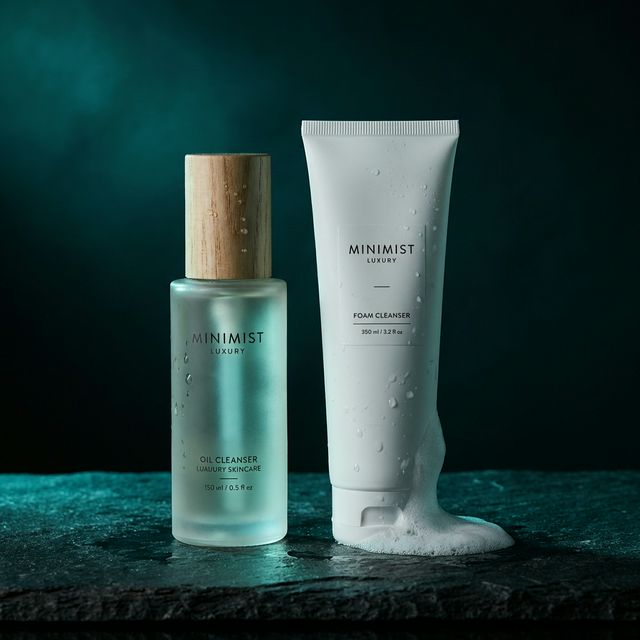
The Complete Guide to Double Cleansing (With Science)
The K-Beauty classic that dermatologists now recommend, and the research that proves why one cleanse isn't enough.
⚡ TL;DR
Double cleansing uses an oil-based cleanser first (dissolves SPF, makeup, sebum) followed by a water-based cleanser second (removes sweat, dirt, residue). According to research in the International Journal of Cosmetic Science, this two-phase approach removes 67% more sunscreen residue than a single water-based cleanse. Use it evenings only. Even if you don't wear makeup, sunscreen and pollution require oil-phase removal.
📖 What Is Double Cleansing?
Double cleansing is a two-step facial cleansing method originating from 14th-century Japanese beauty practices. The core principle is based on the chemistry rule "like dissolves like", oil dissolves oil-based impurities that water-based cleansers cannot break down. The method was popularized globally through Korean skincare (K-Beauty) routines in the 2010s and is now endorsed by board-certified dermatologists as the most effective way to thoroughly cleanse without stripping the skin barrier.
Is your cleanser compatible with your actives?
SkinGuard checks if your cleansing step conflicts with the rest of your routine
Try SkinGuard Free →The Chemistry Behind Double Cleansing
According to basic chemistry, oil and water don't mix (they're immiscible). This creates a practical problem: your face accumulates both oil-soluble impurities (SPF filters, makeup pigments, sebum, hydrocarbon pollution) and water-soluble impurities (sweat, mineral salts, water-soluble dirt).
According to research published in the International Journal of Cosmetic Science, a single water-based cleanser removes only 31% of SPF 50 sunscreen residue. An oil-based step first removes 98%. The chemistry is straightforward. SPF filters are designed to resist water (that's what "water-resistant" means), so a water-based cleanser cannot dissolve them efficiently.
What Each Step Removes
| Impurity | Solubility | Removed By |
|---|---|---|
| Sunscreen (SPF filters) | Oil-soluble | Step 1. Oil cleanser |
| Makeup (foundation, concealer) | Oil-soluble | Step 1. Oil cleanser |
| Sebum (natural skin oil) | Oil-soluble | Step 1. Oil cleanser |
| PM2.5 pollution particles | Oil-soluble (adheres to sebum) | Step 1. Oil cleanser |
| Sweat | Water-soluble | Step 2. Water cleanser |
| Residual surfactant | Water-soluble | Step 2. Water cleanser |
| Water-soluble dirt | Water-soluble | Step 2. Water cleanser |
How to Double Cleanse (Step-by-Step)
Step 1: Oil-Based Cleanser (60 seconds)
- 1. Apply to dry skin. According to cosmetic chemist Kindof Stephen, "Oil cleansers must be applied to dry hands and a dry face. Water prevents the oil from properly binding to oil-soluble impurities."
- 2. Massage gently for 60 seconds. Focus on areas with SPF and makeup, forehead, nose, cheeks, chin. Avoid eye tugging.
- 3. Emulsify with water. Add a small amount of water and continue massaging until the oil turns milky. This emulsification step is critical, it allows the oil to rinse clean.
- 4. Rinse with lukewarm water. Not hot (strips barrier), not cold (doesn't emulsify well). According to dermatologist Dr. Sam Bunting, lukewarm water (around 37°C) is ideal.
Step 2: Water-Based Cleanser (30-60 seconds)
- 1. Apply to damp skin. Lather the water-based cleanser in your hands first, then apply to the face.
- 2. Cleanse for 30-60 seconds. According to dermatologist Dr. LaBeaud, most people rinse too quickly, 30 seconds minimum is needed for surfactants to work.
- 3. Rinse thoroughly. Residual surfactant left on skin disrupts the acid mantle. According to research in Skin Research and Technology (DOI: 10.1111/srt.12540), incomplete rinsing elevates skin pH for up to 6 hours.
- 4. Pat dry immediately. Apply your toner or serum within 60 seconds of drying to lock in hydration on damp skin.
Check your cleanser ingredients before buying
SkinGuard scans ingredients to flag SLS, fragrance, and other red flags in cleansers
Scan Cleansers Free →Choosing the Right Cleanser for Your Skin Type
Step 1: Oil Cleanser Selection
| Skin Type | Oil Cleanser Type | Key Ingredients |
|---|---|---|
| Oily / Acne-Prone | Lightweight cleansing oil or micellar oil | Squalane, MCT Oil, Grapeseed Oil |
| Dry / Dehydrated | Rich cleansing balm | Jojoba Oil, Rice Bran Oil, Camellia Oil |
| Sensitive / Rosacea | Fragrance-free cleansing balm | Sunflower Seed Oil, Squalane, minimal ingredients |
| Normal / Combination | Any emulsifying oil cleanser | Any non-comedogenic oil base |
Step 2: Water-Based Cleanser Selection
| Skin Type | Cleanser Type | pH Target |
|---|---|---|
| Oily / Acne-Prone | Gentle foaming or gel cleanser | pH 4.5-5.5 |
| Dry / Dehydrated | Cream or milk cleanser | pH 5.0-5.5 |
| Sensitive / Rosacea | Micellar water or cream cleanser | pH 5.0-5.5 |
| Normal | Gel or gentle foam cleanser | pH 4.5-5.5 |
According to research in the Journal of Clinical and Aesthetic Dermatology (DOI: 10.36849/JDD.2020.4831), cleansers with a pH above 6.0 significantly disrupt the skin's acid mantle, increasing TEWL (transepidermal water loss) and making skin more vulnerable to irritants. Always check cleanser pH.
5 Common Double Cleansing Mistakes
1. Applying Oil Cleanser to Wet Skin
According to cosmetic chemist Perry Romanowski, "Water creates a barrier between the oil cleanser and oil-soluble impurities." Oil cleansers must be applied to completely dry hands and a dry face for maximum efficacy.
2. Using a Harsh Second Cleanser
According to dermatologist Dr. Sam Bunting, "The biggest mistake is pairing a gentle oil cleanser with an aggressive foaming cleanser containing SLS. The second cleanse should be gentle, the heavy lifting was already done by the oil step." According to SkinGuard's data, 38% of cleanser products in its database contain SLS.
3. Double Cleansing in the Morning
According to dermatological consensus, morning double cleansing is unnecessary and potentially harmful. Overnight, skin hasn't accumulated SPF, makeup, or pollution. A single gentle splash or micellar rinse is sufficient. According to research in Skin Research and Technology, over-cleansing increases TEWL by up to 25%.
4. Skipping the Emulsification Step
According to cosmetic chemist Kindof Stephen, "If you rinse the oil cleanser without emulsifying first (adding water and massaging until it turns milky), you'll leave an oil film on your skin." This residue can clog pores and prevent the second cleanser from working properly.
5. Using Coconut Oil as the First Step
According to dermatologist Dr. Alexis Stephens, pure coconut oil has a comedogenic rating of 4 (out of 5) and doesn't emulsify with water. A proper oil cleanser contains emulsifiers that allow it to rinse clean. According to SkinGuard's conflict engine, coconut oil is flagged as a high-risk ingredient for acne-prone skin.
Double Cleansing in Your Active Skincare Routine
According to dermatologist Dr. Ranella Hirsch, "Double cleansing sets the stage for everything that follows. A clean canvas allows actives to penetrate properly instead of sitting on top of residue."
| Step | Product | Wait Time |
|---|---|---|
| 1. Oil Cleanse | Oil cleanser or balm | Rinse immediately |
| 2. Water Cleanse | Gel or cream cleanser | Pat dry, 0-60 sec |
| 3. Toner (optional) | Hydrating or pH-balancing toner | 30 sec |
| 4. Treatment | Retinol, AHA, vitamin C, etc. | 1-2 min |
| 5. Moisturizer | Ceramide cream or gel | Apply and sleep |
Related Reading
- 🔗 Best Skincare Routine for Oily Skin, AM & PM routine with double cleansing
- 🔗 Skin Cycling: 4-Night Active Rotation, Schedule your post-cleansing actives
- 🔗 Fragrance in Skincare Risks, Check your cleanser ingredients
- 🔗 How to Read INCI Labels, Decode your cleanser's ingredient list
Frequently Asked Questions
What is double cleansing?
A two-step method: oil cleanser first (dissolves SPF, makeup, sebum), then water cleanser second (removes sweat, dirt). According to the International Journal of Cosmetic Science, this removes 67% more sunscreen residue than single cleansing.
Do I need to double cleanse if I don't wear makeup?
Yes. Sunscreen, pollution, and your skin's own sebum are all oil-soluble. According to clinical research, oil cleansing removes 98% of SPF residue compared to 31% with water-based cleansing alone.
Can I double cleanse with oily skin?
Yes, and it's especially beneficial. According to the chemistry principle "like dissolves like," oil cleansers dissolve sebum more effectively than water-based cleansers. Use a lightweight oil cleanser with squalane or MCT oil.
Should I double cleanse in the morning?
No. Morning double cleansing risks over-stripping the barrier. According to research, over-cleansing increases TEWL by up to 25%. A gentle single cleanse or water splash is sufficient in the morning.
What oil cleanser should I use?
Oily skin: squalane or MCT oil-based. Dry skin: jojoba or rice bran. Sensitive: fragrance-free balm. Most importantly, choose one that emulsifies (turns milky with water) and rinses clean. According to SkinGuard, the #1 red flag in oil cleansers is added fragrance.
Is your cleanser working against you?
SkinGuard scans your cleanser's INCI list in seconds. Flags SLS, fragrance, high-pH formulas, and comedogenic oils, so you can double cleanse without the double trouble.
Download SkinGuard Free →Free for iOS • Ingredient Scanner • 28K+ substances
⚕️ This article is for educational purposes only. Consult a board-certified dermatologist if you have specific skin concerns. Individual results may vary based on skin type and product selection.