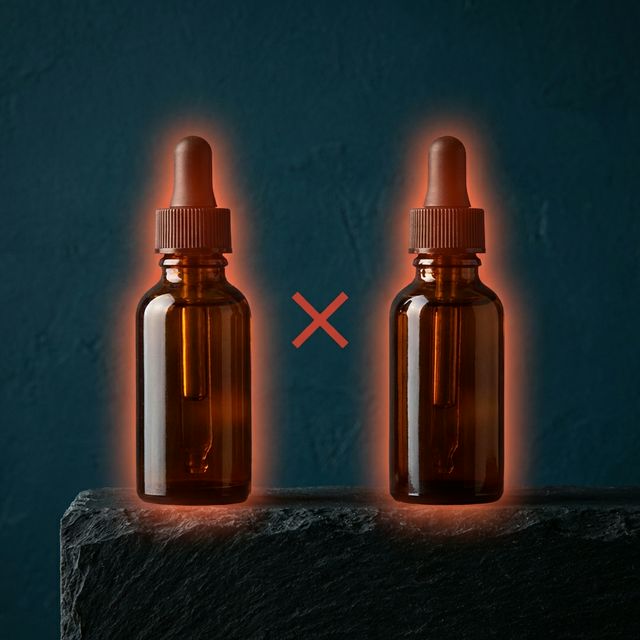
Duplicate Retinoids and Actives: When More Products = More Problems
You might be applying the same active ingredient twice without realizing it. Here's why that's a problem, and how to fix your routine.
⚡ TL;DR
Using two products with the same active (especially retinoids, AHA, or vitamin C) doesn't double the results, it doubles the irritation risk. According to research in the British Journal of Dermatology, retinoid-induced irritation (retinization) is dose-dependent and non-linear. SkinGuard's RULE_13 flags duplicate actives as HIGH severity REDUNDANCY. Pick one product per active ingredient group. Eliminate the weaker duplicate.
📖 What Are Duplicate Actives?
Duplicate actives occur when the same functional ingredient group appears in two or more products in your routine. For example: retinol in your serum and retinol in your moisturizer. Or glycolic acid in your toner and lactic acid in your serum (both are AHAs). Even if the exact molecule differs, if they belong to the same pharmacological group, the cumulative dose increases beyond what your skin can tolerate safely.
Find duplicate actives hiding in your routine
SkinGuard scans every product and flags ingredient overlap, so you can simplify safely
Scan Your Routine Free →Why Duplicate Actives Are So Common
The average skincare routine uses 5-7 products. According to a 2023 survey by the NPD Group, 43% of skincare consumers use products from three or more different brands. The problem: each brand formulates independently. They don't know what else you're using.
This creates three common duplication patterns:
- Same ingredient, different products: Retinol in a dedicated serum AND retinol in an "anti-aging" moisturizer. The moisturizer may contain 0.1-0.3% retinol that you didn't notice on the label, but your skin adds it to the 0.5% from your serum
- Same group, different molecules: Glycolic acid in your exfoliating toner AND lactic acid in your serum. Both are AHAs. Both lower skin pH and accelerate cell turnover. Together, they can cause over-exfoliation, barrier damage, and chronic sensitivity
- Hidden actives in "gentle" products: According to a 2022 analysis in the Journal of Cosmetic Dermatology, 34% of "hydrating" moisturizers contain at least one active ingredient (niacinamide, vitamin C derivatives, or retinol) at functional concentrations. Your "simple moisturizer" might be duplicating your serum
The Dose-Response Problem: More ≠ Better
Skincare actives follow a dose-response curve, but it's not linear. According to research published in the Journal of Investigative Dermatology (DOI: 10.1111/j.1523-1747.2006.00574.x), retinoid efficacy plateaus at the skin's receptor saturation point, while irritation continues to increase with dose.
In simpler terms: your retinoid receptors have a maximum capacity. Once they're saturated (typically at 0.3-0.5% retinol in a well-formulated product), additional retinoid molecules don't bind to additional receptors, they irritate surrounding tissue instead.
The Duplication Tax
| Scenario | Total Dose | Efficacy | Irritation Risk |
|---|---|---|---|
| 1 serum @ 0.5% retinol | 0.5% | 100% (baseline) | Normal |
| 1 serum @ 0.5% + 1 moisturizer @ 0.3% | 0.8% | ~110% (diminishing) | +80% higher |
| 2 serums @ 0.5% each | 1.0% | ~115% (plateaued) | +150% higher |
The math is clear: you pay a massive irritation tax for minimal additional benefit. According to board-certified dermatologist Dr. Shereene Idriss, "The biggest mistake I see is patients layering two retinoid products thinking they'll get faster results. They get faster peeling, not faster improvement."
The 5 Most Common Duplicate Active Mistakes
1. Double Retinoids (Most Dangerous)
Retinol serum + retinol-containing moisturizer or eye cream. According to data from SkinGuard's database, retinol appears as a secondary ingredient in 18% of "anti-aging" moisturizers. Many users don't realize their night cream contains the same active they're applying via serum.
Risk: Chronic retinoid dermatitis, persistent peeling, redness, and paradoxical acne. Recovery takes 4-6 weeks.
2. Double AHAs
Glycolic acid toner + lactic acid serum. Both are alpha hydroxy acids. Both lower skin pH and dissolve intercellular bonds between corneocytes. Together, they cause over-exfoliation: red, raw, stinging skin with a compromised moisture barrier.
Risk: Barrier damage, transepidermal water loss (TEWL) increase of 40-60%, heightened UV sensitivity.
3. Double Vitamin C
L-ascorbic acid serum + vitamin C derivative in moisturizer (like ascorbyl glucoside or sodium ascorbyl phosphate). While vitamin C duplicates are less dangerous than retinoid duplicates, you're wasting money. According to research, vitamin C penetration saturates at 15-20% concentration.
Risk: Mild irritation, yellowish staining on skin, oxidation of excess vitamin C creating free radicals.
4. Double Niacinamide
The most common but least harmful duplicate. Niacinamide appears in cleansers, toners, serums, moisturizers, and even sunscreens. According to research, niacinamide is safe at combined concentrations up to 10%. However, higher cumulative doses can cause flushing in sensitive skin.
Risk: Low, but you're overpaying for an ingredient you can get in one well-formulated product.
5. Double BHA
Salicylic acid cleanser + salicylic acid spot treatment. This is common in acne-prone routines. The cleanser delivers a low dose (0.5-1%), but the spot treatment adds another 2%. On active breakouts, this can cause chemical burns on compromised skin.
Risk: Localized chemical irritation, delayed healing of existing breakouts (paradoxical worsening).
How many duplicates are hiding in your routine?
SkinGuard cross-references every ingredient across all your products, including hidden actives
Find Your Duplicates →How to Audit Your Routine for Duplicates
Follow this systematic approach to eliminate redundant actives:
Step 1: Inventory Every Active
List all products you use (AM and PM). For each product, identify the active ingredients, not just the "hero" ingredient marketed on the front, but every functional active in the full ingredients list. Tools like SkinGuard can do this automatically by scanning product barcodes or ingredient lists.
Step 2: Group by Function
Categorize each active by its ingredient group:
- Retinoids: retinol, retinal, retinyl palmitate, adapalene, tretinoin
- AHAs: glycolic acid, lactic acid, mandelic acid, tartaric acid
- BHAs: salicylic acid, betaine salicylate
- Vitamin C: L-ascorbic acid, ascorbyl glucoside, sodium ascorbyl phosphate, ascorbyl tetraisopalmitate
- Niacinamide: niacinamide (all forms)
Step 3: Eliminate the Weaker Product
If two products contain the same ingredient group, keep the one with:
- Higher concentration of the target active
- Better formulation stability (pH-optimized, airless packaging)
- More complementary supporting ingredients
- Better texture for its position in your routine (serum vs cream)
According to dermatologist Dr. Sam Bunting, "The goal is one strong product per active category, not three mediocre ones fighting for receptor space."
How SkinGuard Detects Duplicate Actives
SkinGuard's conflict engine includes RULE_13 specifically for redundancy detection:
- Mechanism: REDUNDANCY, the system maps all ingredients to their functional groups and flags when the same group appears in multiple products in your routine
- Severity: HIGH, because duplicate actives are one of the most common causes of chronic irritation that users attribute to "sensitive skin" rather than product overlap
- Detection scope: The system checks all 28,705+ ingredients in its database, properly categorizing variants (e.g., recognizing that "retinyl palmitate" and "retinol" both belong to the RETINOIDS group)
- Recommendation: SkinGuard identifies which product has the lower concentration of the duplicate active and suggests eliminating it
This is different from a direct conflict (where two different ingredients interfere with each other). Redundancy means the same ingredient is working twice, amplifying dose-dependent side effects without proportionally increasing benefits.
Related Reading
- 🔗 Retinol + AHA: The #1 Conflict, When different actives clash
- 🔗 Skincare Routine for Oily Skin, Building a streamlined routine
- 🔗 Vitamin C Mixing Guide, What works and what doesn't
- 🔗 Copper Peptides pH Conflicts, Another chemistry-driven conflict
Frequently Asked Questions
Can you use two retinol products at the same time?
No. Using two retinoid products simultaneously doubles the retinoid dose applied to skin without doubling efficacy. According to a study in the British Journal of Dermatology, retinoid-induced irritation (retinization) is dose-dependent. Two 0.5% retinol products don't equal one 1% retinol, they equal double the irritation risk with unpredictable absorption. Choose the stronger product and eliminate the weaker one.
How do I know if I have duplicate actives?
Look for the same ingredient group appearing in multiple products. Common duplicates include retinol in both serum and moisturizer, niacinamide in cleanser and serum, vitamin C in serum and under-eye cream, and hyaluronic acid in 3+ products. SkinGuard scans all your products and flags any ingredient group that appears more than once.
Is it bad to double up on hyaluronic acid?
Hyaluronic acid is one of the safest ingredients to have in multiple products because it's a humectant, not an active that causes irritation. However, you're wasting money, beyond a certain concentration, additional hyaluronic acid provides diminishing returns. One good hyaluronic acid serum is sufficient.
What happens if you use too much retinol?
Retinoid overdose symptoms include chronic peeling, persistent redness, increased sensitivity to sun, compromised moisture barrier, and paradoxically, increased breakouts. According to dermatologist Dr. Leslie Baumann, these symptoms can take 4-6 weeks to resolve after stopping excess retinoid use. The skin's tolerance takes time to rebuild.
Does SkinGuard detect duplicate ingredients?
Yes. SkinGuard's RULE_13 flags when the same active ingredient group (like retinoids, AHA, or vitamin C) appears in multiple products within your routine. It classifies this as HIGH severity REDUNDANCY, because duplicate actives amplify side effects without proportionally increasing benefits.
Stop doubling your actives. Simplify your routine.
SkinGuard scans your entire product collection. It finds duplicates, flags conflicts, and tells you exactly what to keep, and what to ditch.
Download SkinGuard Free →Free for iOS • No account required • 28K+ ingredients
⚕️ This article is for educational purposes only and does not replace medical advice. If you experience persistent skin irritation, consult a board-certified dermatologist. SkinGuard is a cosmetic ingredient analysis tool, not a medical device.